Maersk Resumes Suez Canal Route for Middle East–US East Coast Shipping, Cutting Transit Times
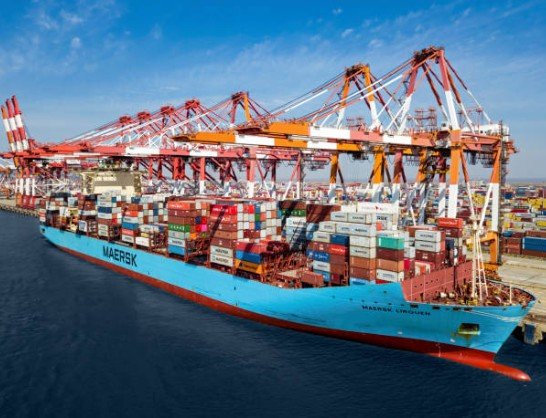
Global container shipping giant Maersk has announced that it will resume its Middle East-to-U.S. East Coast shipping service through the Suez Canal, marking another important step toward restoring commercial shipping operations through the Red Sea corridor.
The decision comes after many international shipping companies diverted vessels away from the Suez Canal following security threats and attacks on commercial ships in the Red Sea. Those disruptions forced carriers to reroute vessels around the Cape of Good Hope, significantly increasing voyage distances, fuel consumption, and delivery times.
According to Maersk, the return to the trans-Suez route for its Middle East service will deliver major improvements in shipping efficiency and customer transit times.
The company stated that westbound voyages will be shortened by an average of seven days, while eastbound sailings are expected to be up to 14 days faster compared with the longer route around southern Africa.
The move reflects growing confidence among some global shipping lines that conditions are improving sufficiently to gradually restore operations through one of the world’s most strategically important maritime trade corridors.
Earlier this week, Maersk also confirmed that it would resume selected voyages through the Suez Canal under its Gemini cooperation network with Germany-based Hapag-Lloyd, further supporting the gradual normalization of international container shipping services.
Despite the positive development, shipping operations in the Middle East continue to face challenges. Maersk noted that regional tensions, including disruptions linked to the recent conflict involving Iran, have affected some vessel movements, with certain ships experiencing delays entering or leaving Gulf ports.
Read:
The reopening of more services through the Suez Canal is being closely watched by the global maritime industry, as it has the potential to reduce shipping costs, improve supply chain reliability, and accelerate cargo movements between the Middle East, Europe, and North America.