
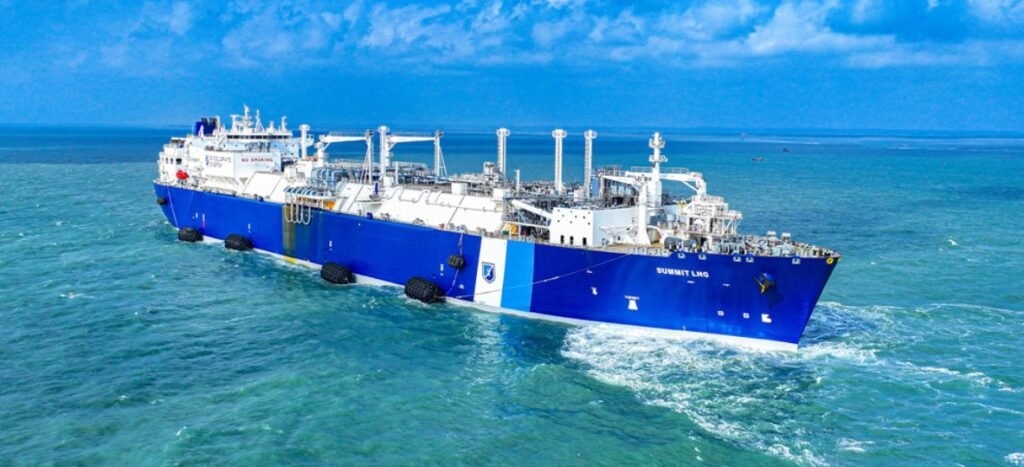
Summit LNG Completes 300th Ship-to-Ship Transfer, Boosting Bangladesh’s Energy Security
Summit LNG Terminal Co (Pvt) Ltd (SLNG) has completed its 300th ship-to-ship (STS) LNG transfer, marking a significant milestone for Bangladesh’s energy infrastructure and offshore liquefied natural gas operations. The achievement highlights the terminal’s continued commitment to operational safety, efficiency and reliable energy supply.
During the 2025–2026 financial year, the terminal supplied approximately 18% of Bangladesh’s total gas demand, reinforcing its role in national energy security. The milestone also underscores the importance of reliable LNG import infrastructure, offshore maritime logistics and regasification operations in delivering natural gas to the national grid.
Since its commissioning in April 2019, SLNG has received 41,853,294 cubic metres of liquefied natural gas (LNG) and supplied approximately 945,337,306 MMBTU of regasified liquefied natural gas (RLNG) to Bangladesh’s national gas grid, according to the company’s press release.

LNG Terminal Operations and International Partnerships
SLNG acknowledged the contributions of Excelerate Energy LP and PSA Marine, Singapore, for supporting safe, efficient and uninterrupted ship-to-ship transfers and terminal operations.
The company also expressed gratitude to its clients, including the Government of Bangladesh, Petrobangla and RPGCL, for their continued trust. It recognised the support of foreign lenders, including SMBC, Singapore, and other financial partners, whose collaboration has contributed to its operational journey.
Its engineering and classification partners,MacGregor, Geocean, Det Norske Veritas (DNV), Bureau Veritas (BV) and Shelf Subsea, were also recognised for their contributions.
According to the release, leading international oil and gas companies, including QatarGas, BP, Shell, Total, Chevron Shipping, Cheniere Energy, Petronas and NLNG, have vetted the terminal as a safe and compliant facility.
Why the 300th LNG Transfer Matters for Energy Security
The completion of 300 ship-to-ship operations highlights the importance of specialised LNG vessels, offshore transfer systems and coordinated terminal management in maintaining a dependable energy supply chain.
For Bangladesh, where imported LNG contributes to national gas availability, the performance of offshore terminals is closely linked to energy security and the continuity of gas supplies. Efficient transfer operations and reliable regasification infrastructure help connect LNG cargoes arriving by sea with the country’s domestic gas transmission network.
SLNG’s reported contribution of approximately 18% of national gas demand during the 2025–2026 financial year demonstrates the terminal’s significance to Bangladesh’s energy infrastructure. Maintaining operational safety, technical reliability and coordination among shipping partners and regulators remains essential to sustaining this role.
Read:Singapore Expands LNG Bunkering Capacity with Eight New Marine Fuel Licences
Government and Regulatory Support
SLNG acknowledged the contributions of government departments and regulatory organisations involved in supporting its operations.
These include the Department of Shipping, Chittagong Port Authority, Department of Environment, Bangladesh Investment Development Authority (BIDA), Bangladesh Energy Regulatory Commission (BERC), Ministry of Energy and Mineral Resources, Customs, National Board of Revenue (NBR), Registrar of Joint Stock Companies and Firms (RJSC), Department of Explosives, Bangladesh Bank and Gas Transmission Company Limited (GTCL).
The company also recognised the support of the Bangladesh Navy, Coast Guard, Moheshkhali Upazila Administration, Bangladesh Inland Water Transport Authority (BIWTA), Department of Fisheries, Home Ministry, Ministry of Finance, River Police and Cox’s Bazar District Administration.
Their involvement reflects the range of institutional coordination associated with offshore energy infrastructure, maritime safety, environmental oversight and regulatory compliance.
LNG Suppliers and Global Shipping Companies
SLNG also expressed appreciation to the LNG suppliers, shipping companies and energy trading organisations whose collaboration has supported its offshore ship-to-ship operations.
The companies named in the release include Qatar Energy, BP Shipping, Nakilat Shipping, Maran Gas Maritime, MOL LNG Shipmanagement, NYK, K-Line, Höegh LNG, Teekay Shipping, Golar LNG and Shell International Trading & Shipping Co Ltd (STASCO).
The release also acknowledged Total Energy, Shell, Vitol, BP Gas, Angola LNG, ENN LNG, Total Gas & Power, Cheniere, PetroChina, ExxonMobil LNG and Excelerate.
SLNG credited these partners with helping ensure the continuity and safety of offshore LNG transfer operations.
Read:PetroChina Suspends Venezuelan Crude Trading as U.S. Takes Control of Exports
Outlook for Bangladesh’s LNG and Maritime Energy Sector
The milestone highlights the strategic relationship between maritime transportation, LNG import terminals and national energy security. Offshore ship-to-ship transfers require coordination among vessel operators, energy suppliers, technical partners and terminal personnel to maintain safe and efficient operations.
For Bangladesh, dependable LNG infrastructure remains important for moving imported gas into the national transmission system. The terminal’s reported supply contribution during the 2025–2026 financial year demonstrates its role in meeting domestic gas demand.
SLNG concluded by recognising the dedication, professionalism and resilience of its employees, whose continued commitment supports the terminal’s safe and efficient daily operations.