
New Hormuz Shipping Attack Raises Maritime Security and Oil Supply Fears
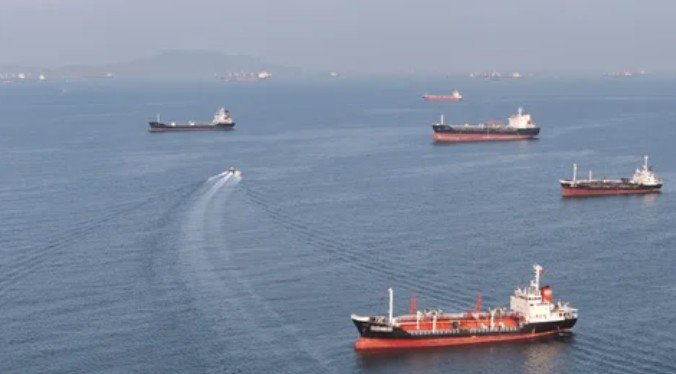
A new attack on a vessel in the Strait of Hormuz has intensified concerns over maritime security, commercial shipping and global oil supplies, as the widening Middle East conflict continues to threaten vital energy and trade routes. Maritime authorities reported that a projectile struck a vessel while it was travelling through the strategic waterway. A fire broke out following the attack, and local authorities evacuated the crew.
The incident has heightened concerns over global shipping, oil transportation and energy security, coming shortly after Saudi Arabia temporarily shut its key East-West oil pipeline following a drone attack. The pipeline has become an important alternative route for transporting Saudi crude to international markets while the Strait of Hormuz remains heavily disrupted by the war.
The vessel attack was reported a day after Saudi Arabia announced the temporary closure of its East-West pipeline as a precaution following a drone attack that Baghdad and Riyadh said had originated in Iraq, where Iranian-backed militias operate.
The continuing attacks in the widening Middle East war could push energy prices even higher after Brent crude surged back above $100 a barrel over the past week. Growing risks to major energy corridors are also increasing uncertainty for the international shipping industry.
Saudi Oil Pipeline Shutdown Raises Supply Concerns
The 1,200-km (745-mile) East-West pipeline runs across the Arabian Peninsula and has served as the main route for Middle Eastern oil supplies to global markets over the past six months while the Strait of Hormuz has been largely closed because of the war.
The pipeline had been carrying 4 million to 5 million barrels of oil per day, equivalent to 4% to 5% of global supply. Its operation has helped shield Saudi Arabia from the worst of the disruption that has affected other Gulf oil and gas exporters.
There was no immediate claim of responsibility for the attack on the pipeline. Satellite images showed black smoke rising from an area of the pipeline south of Medina.
The Saudi Foreign Ministry said the attack caused some injuries and damage that was still being assessed, without providing details about its impact on oil exports.
US President Donald Trump, who was visiting Ireland to attend a golf tournament at one of his resorts, said Iran was probably responsible.
On Saturday, Saudi Civil Defence said that a projectile fired by the Houthis had injured two people in the Jazan region and damaged several buildings, including a mosque.
A separate maritime incident was also reported near Iran’s southern coast. Iranian state media reported that an Iranian commercial vessel was struck near Qeshm Island, killing one person and wounding three others.
The circumstances surrounding the separate incident were not immediately clear, and it has not been established whether it was connected to the vessel attack reported in the Strait of Hormuz.
Oil Prices Rise as Shipping Risks Expand
Oil prices have surged over the past week, while the retail price of diesel in the United States rose above a record $6 a gallon.
The increase came as the United States and Iran both fired on tankers and Iran-aligned Houthi forces in Yemen advanced along the Red Sea, potentially extending disruption to another major oil transportation route.
The growing pressure around both the Strait of Hormuz and Bab el-Mandeb Strait has created a wider challenge for commercial shipping. Any prolonged disruption could affect tanker movements, freight costs, insurance premiums and the international movement of energy supplies.
Washington now faces a dilemma over whether to help Saudi Arabia fight the Houthis, potentially risking a further expansion of the war.
Saudi Arabia’s de facto ruler, Crown Prince Mohammed bin Salman, spoke by phone with Trump on Thursday and asked for US military assistance in fighting the Houthis.
The crown prince was told that Washington would not intervene directly for now but would provide intelligence support.
Trump confirmed on Saturday that he had spoken with the crown prince and said the Houthis had also contacted his administration, asking Washington not to become directly involved in the conflict.

Bab el-Mandeb Adds Another Shipping Risk
The conflict has also intensified around the Bab el-Mandeb Strait, a critical maritime chokepoint connecting the Red Sea with the Gulf of Aden.
Four Yemeni government sources said the Houthis had seized the strategic island of Perim on Friday in the middle of the Bab el-Mandeb Strait, known as the “Gate of Tears” at the mouth of the Red Sea.
The Houthis have been attacking Saudi ships in the area since declaring a blockade in July and targeting other Saudi oil facilities.
The developments around Bab el-Mandeb have added another layer of uncertainty for the global shipping industry, particularly at a time when commercial traffic through the Strait of Hormuz is already severely disrupted.
The simultaneous security risks around two strategically important waterways could affect tanker operations, cargo movements, shipping schedules and the wider maritime supply chain.
Read:Strait of Hormuz Shipping Crisis Escalates as US and Iran Target Oil Tankers
Iran Plays Down Prospects of Oman Meeting
Diplomatic efforts to end the conflict have so far failed to produce a breakthrough.
There have been no talks between the United States and Iran aimed at ending the conflict since a June agreement collapsed within weeks.
In a post on X on Saturday, Ebrahim Azizi, head of the Iranian parliament’s National Security Committee, said dialogue and negotiations were useless as long as the United States did not accept all of Iran’s conditions.
Iran’s Foreign Ministry said on Friday that Iran would attend a meeting with Gulf Arab states in Oman on Monday, where the future of the Strait of Hormuz would be discussed.
However, a senior Iranian official, speaking on condition of anonymity on Saturday, played down the prospects of a breakthrough.
The meeting, called at Oman’s initiative, is intended to discuss issues including the strait but is not expected to produce a signed agreement.
An agreement on routes through the strait between Iran and Oman will be presented at Monday’s meeting, which will also be attended by Iraq.
The strait will not reopen unless seven conditions conveyed by Iran to the United States are met, according to Iranian reporting, without elaborating on those conditions.
Iran wants its control of the Strait of Hormuz to be recognised, allowing it to collect fees from ships using the waterway, a demand Washington rejects.
Oman, which controls the opposite bank of the strait, says it is negotiating the agreement with the consent of other regional states.
Maritime Security at the Centre of Global Shipping Concerns
The latest vessel attack, Saudi pipeline shutdown and continuing instability around the Bab el-Mandeb Strait have placed maritime security at the centre of growing concerns over global trade and energy supplies.
For the international shipping industry, the situation extends beyond the immediate safety of individual vessels. Prolonged disruption around major maritime chokepoints could increase tanker risks, insurance costs, freight rates and pressure on global oil markets.
The developments also have implications for maritime law, particularly in relation to freedom of navigation, vessel safety, passage rights and the responsibilities of states and commercial vessels operating in strategically important waterways.
For shipowners, shipping companies and seafarers, however, the immediate priority remains the safe movement of vessels through increasingly dangerous waters.
With the Strait of Hormuz heavily disrupted and the Bab el-Mandeb facing renewed security risks, the latest vessel attack and crew evacuation underline the growing challenges confronting commercial shipping and global maritime trade.
The combination of oil supply risks, shipping security threats and geopolitical tensions means energy markets, governments and maritime operators will continue to closely monitor developments around the Strait of Hormuz and Bab el-Mandeb.
Any prolonged disruption could have consequences well beyond the region, affecting oil transportation, tanker shipping, freight markets, energy security and international trade.
Read:Four Projectiles Strike Two Vessels Near Strait of Hormuz, Raising Maritime Security Concerns