Pakistan Warns of Self-Defense if Houthi Threats Endanger Maritime Interests and Red Sea Shipping
Pakistan has strongly condemned the Houthi movement’s recent threats against Saudi Arabia and commercial shipping linked to the Kingdom through the Red Sea, warning that any hostile action targeting Pakistani-flagged vessels or the country’s maritime interests would be considered a serious threat to national security. The statement comes as tensions continue to rise across the Middle East, increasing concerns over global shipping routes, maritime security, oil transportation, and the stability of international trade.
The warning follows the Houthis’ announcement of an immediate maritime embargo on Saudi Arabia, a move that has intensified fears of further disruption in one of the world’s most strategically important shipping corridors. If enforced, the blockade could significantly affect Saudi Arabia’s Red Sea ports, which have become increasingly important for crude oil exports as security concerns continue to limit shipping through the Strait of Hormuz.
In an official statement, Pakistan’s Foreign Office described threats against commercial shipping and lawful trade with Saudi Arabia as unacceptable and contrary to international law. Islamabad expressed particular concern over reports that vessels engaged in legitimate commercial trade with the Kingdom could become targets, warning that such actions threaten regional stability, undermine freedom of navigation, challenge the rules-based maritime order, and jeopardize the uninterrupted flow of global commerce.
Pakistan further declared that any hostile act against Pakistani-flagged ships or Pakistani maritime assets would be regarded as a grave threat to its sovereignty and national security. The government stated that it reserves the right to take all necessary measures, including the lawful use of force in self-defense, in accordance with the United Nations Charter and international law, to safeguard its maritime interests.
Islamabad also voiced deep concern over attempts to draw Saudi Arabia further into the ongoing Middle East conflict, where hostilities between the United States and Iran continue to escalate. Reaffirming its longstanding strategic partnership with Riyadh, Pakistan reiterated its unwavering support for Saudi Arabia’s security, sovereignty, territorial integrity, and prosperity while calling on all parties to exercise restraint, pursue dialogue and diplomacy, and ensure the safety of international maritime shipping.
The latest developments come after the Houthis and Saudi Arabia exchanged fire last week for the first time in years, placing additional pressure on the fragile truce originally reached in 2022. Earlier this month, following missile attacks against Saudi Arabia, Prime Minister Shehbaz Sharif condemned what he described as blatant attacks on the Kingdom. Pakistan also supported Saudi Arabia during an emergency United Nations Security Council briefing on Yemen, urging all sides to resolve disputes peacefully through diplomatic engagement.
Security cooperation between Pakistan and Saudi Arabia has continued to deepen in recent years. Under the Strategic Mutual Defence Agreement signed in September 2025, both countries agreed to regard an attack on either nation as an act of aggression against both. The agreement has further strengthened decades of defence and security cooperation between Islamabad and Riyadh and remains a key pillar of Pakistan’s regional foreign policy.
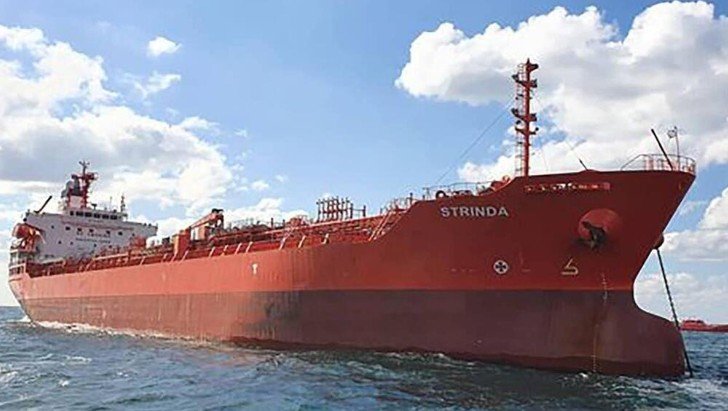
Meanwhile, concerns are growing across the global shipping industry as commercial vessels begin altering their routes in response to the deteriorating security situation in the Red Sea. According to ship-tracking data, four tankers changed course on Wednesday, with two redirecting toward the Suez Canal while the remaining vessels adjusted their destinations to open waters in the Red Sea. A fifth vessel, a vehicle carrier that had previously signaled Saudi Arabia’s Port of Jeddah as its destination, also appeared to reverse course in the Gulf of Aden.
Earlier, three oil tankers carrying Saudi crude destined for China and India turned around in the Red Sea and headed toward the Suez Canal instead of passing near Yemen’s coastline. The movements highlight growing concerns among shipowners and operators over maritime security risks near the Bab al-Mandeb Strait, one of the world’s most critical maritime chokepoints connecting the Red Sea with the Gulf of Aden and the Mediterranean through the Suez Canal.
The Houthis have previously attempted to disrupt commercial shipping in the Red Sea by leveraging their position near the Bab al-Mandeb Strait. Their latest threats have renewed concerns about the security of global energy supply chains, particularly as Saudi Arabia increasingly relies on its Red Sea export terminal at Yanbu to bypass disruptions affecting the Strait of Hormuz.
Adding to market uncertainty, Saudi Arabia’s crude oil exports fell for a third consecutive month in May, reaching approximately 3.434 million barrels per day, down from 3.986 million barrels per day in April, according to data released by the Joint Organisations Data Initiative (JODI). The decline reflects continuing disruptions to regional energy shipping amid heightened geopolitical tensions.
The escalating situation has also drawn international attention. US President Donald Trump stated that the United States would “take care of” the Houthis if they proceed with efforts to blockade Saudi Arabia’s ports, underscoring growing global concern over the security of one of the world’s busiest maritime trade routes.