Red Sea Shipping Crisis Deepens as More Tankers Reroute Following Houthi Threats against Saudi Ports
The security situation in the Red Sea shipping corridor continues to deteriorate as more commercial vessels alter their routes after Yemen’s Houthi movement warned ships against calling at Saudi Arabian ports, raising fresh concerns over global maritime trade, oil supply chains, shipping insurance costs, and energy security.
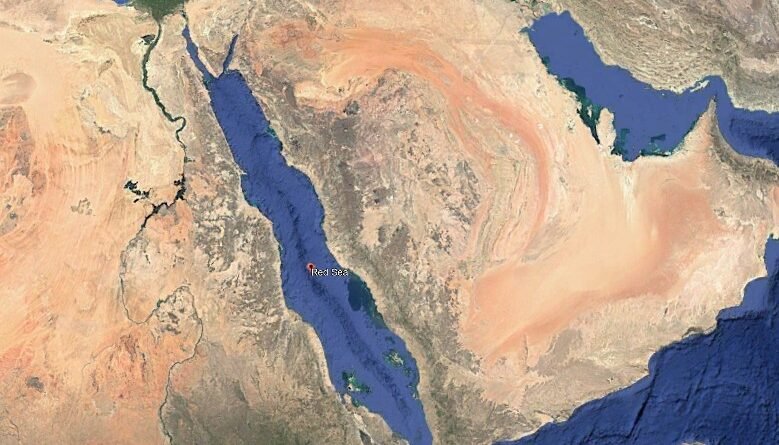
According to ship-tracking data released on Wednesday, four oil tankers changed course in the Red Sea, with two redirecting toward the Suez Canal instead of continuing south through the Bab el-Mandeb Strait. The route changes follow the Houthis’ declaration of a naval blockade against Saudi Arabia, a move that has heightened geopolitical tensions across one of the world’s busiest maritime trade routes.
The latest developments suggest that shipping companies are becoming increasingly cautious as security risks escalate in the region.
Maritime brokerage Clarksons reported that the Houthi threats are already affecting tanker operations. The company noted that several vessels that had loaded crude oil at Yanbu Port on Saudi Arabia’s Red Sea coast have diverted toward the Suez Canal, while other ships have chosen to remain at anchor awaiting further operational guidance rather than transit through the high-risk Bab el-Mandeb chokepoint.
The European Union Naval Force (Operation Aspides) also issued a fresh maritime security advisory on Wednesday, warning that vessels linked to Israel, the United States, or Saudi Arabia face an increased risk of attack in the Red Sea and the Gulf of Aden. Ship operators were advised to postpone voyages through the area where possible until the regional threat level improves.
The advisory further recommended that vessels which have recently loaded or discharged cargo at Saudi ports should minimize their electronic visibility by reducing Automatic Identification System (AIS) transmissions and limiting publicly accessible digital information that could make them easier to identify and target.
Data from LSEG, MarineTraffic, and British maritime risk management firm Vanguard showed that the four tankers all changed direction, with two remaining in open waters in the Red Sea after abandoning their original voyage plans.
A fifth vessel, the vehicle carrier Liu Jiang Kou, also appeared to reverse course in the Gulf of Aden after previously indicating the Saudi Red Sea port of Jeddah as its destination. The vessel is managed by COSCO Shipping, which had not commented on the development.
The latest diversions follow Tuesday’s reports that three Saudi crude oil tankers bound for China and India also made U-turns in the Red Sea and headed toward the Suez Canal instead of sailing past Yemen’s coastline. One of those vessels was the Xin Long Yang, also managed by COSCO.
Industry analysts warn that any disruption to the southern entrance of the Red Sea would eliminate Saudi Arabia’s most important alternative export route to the Strait of Hormuz, significantly increasing concerns over global oil exports, energy markets, and international shipping logistics.
Shipbroker Braemar said the Houthi embargo raises serious questions about the future viability of eastbound tanker traffic departing from Yanbu Port, which serves as the export terminal for crude transported through Saudi Arabia’s East-West Pipeline.
Despite the growing uncertainty, ship-tracking data indicated that several tankers remained anchored near Yanbu on Wednesday while operators assessed the evolving security environment.
Commercial shipping in the Red Sea has yet to recover fully from the wave of Houthi attacks that began in November 2023, when the group targeted merchant vessels in support of Palestinians during the Gaza conflict. Although attacks largely subsided following the Gaza ceasefire reached last October, the latest warnings have revived concerns throughout the global maritime industry.
The Houthis have now warned shipping companies not to load or discharge cargo at Saudi Arabian ports, stating that vessels doing so could become potential targets. Maritime security sources also confirmed receiving multiple radio warnings transmitted to ships operating in the Red Sea since Monday.
One maritime security source said the broadcasts warned all vessels intending to call at Saudi ports that they would be considered legitimate targets, underscoring the heightened security risks facing one of the world’s most strategically important shipping lanes.
Read: Germany Sends Naval Vessels to Red Sea Ahead of Potential Strait of Hormuz Security Mission