Singapore Launches Ship Carbon Capture Calculator for EU ETS Compliance
The Global Centre for Maritime Decarbonisation (GCMD), based in Singapore, has launched a new ship carbon capture calculator to help shipowners assess how onboard carbon capture and storage (OCCS) could reduce their EU Emissions Trading System (EU ETS) compliance obligations. The tool estimates the potential reduction in European Union Allowances (EUAs) that shipping companies may need to surrender for covered emissions.
Launched on 19 October during GCMD’s fifth-anniversary events, the carbon capture assessment tool evaluates how much captured carbon dioxide (CO₂) can be retained, transferred and permanently mineralised. By modelling these processes, it helps shipowners examine the potential regulatory benefits of maritime decarbonisation technology while accounting for operational losses and downstream processing requirements.
Calculator Assesses the Full Carbon Capture Chain
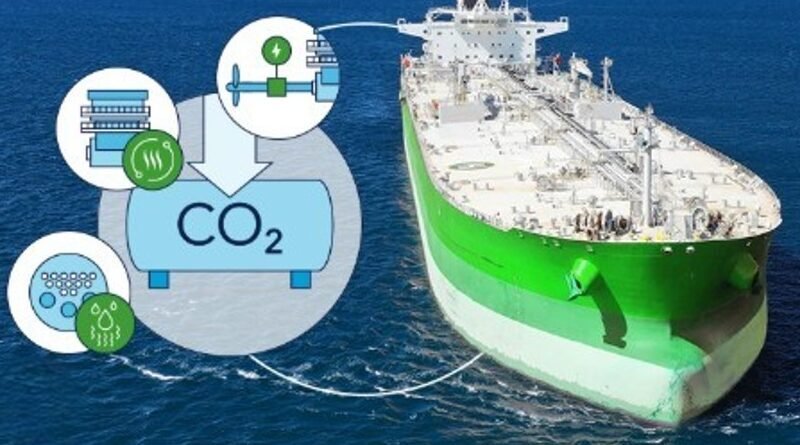
GCMD’s Onboard Carbon Capture and Storage Impact Calculator models the process from CO₂ capture and onboard storage to offloading, downstream processing and carbon mineralisation. Shipowners and maritime professionals can explore different operating scenarios using the official Onboard Carbon Capture and Storage Impact Calculator.
Users can adjust three key operating variables: the CO₂ capture rate, onboard storage capacity and duration of OCCS operation. The calculator also accounts for CO₂ losses during offloading and subsequent processing to estimate how much captured carbon could ultimately be mineralised.
Based on these inputs, the tool estimates the potential reduction in EU Allowances required under the EU ETS. However, it does not forecast EUA market prices or assess the overall financial viability of installing an onboard carbon capture system.
GCMD cautions that the calculator provides theoretical estimates based on specified operating assumptions, calculation boundaries and the prevailing regulatory framework. It does not establish whether a particular carbon capture operation qualifies for regulatory recognition.
Project CAPTURED Demonstrates Emissions Reduction Potential
The calculator builds on GCMD’s Project CAPTURED, which demonstrated an end-to-end value chain for CO₂ captured and liquefied onboard a vessel. The process included ship-to-ship transfer, overland transportation and the permanent binding of carbon through mineralisation.
In July, GCMD reported that verified CO₂ captured during the project could be deducted from emissions requiring the surrender of EU Allowances, provided the carbon is permanently chemically bound in eligible products.
The project achieved a 7.9% net greenhouse gas emissions reduction at a 10.7% gross onboard capture rate. According to GCMD, an optimised carbon value chain operating at the same gross capture rate could increase greenhouse gas savings to 17.8%.
These results highlight the importance of managing emissions throughout the entire process. The environmental benefit depends not only on the quantity of CO₂ captured onboard but also on the efficiency of offloading, transportation and downstream treatment.
What the Calculator Means for EU Carbon Compliance
For shipowners subject to the EU ETS, onboard carbon capture could provide an additional option for managing regulated emissions. The calculator allows operators to compare technical scenarios and estimate how the amount of carbon permanently mineralised could affect their potential EU Allowance surrender requirements.
The key issue is whether captured CO₂ meets the conditions required for regulatory recognition. Capturing carbon alone does not guarantee a reduction in compliance obligations. The quantity ultimately processed, any losses along the value chain and the applicable EU rules all matter.
The tool therefore offers a starting point for evaluating the potential compliance value of onboard carbon capture, rather than a guarantee of lower carbon costs or a prediction of investment returns. Shipowners must assess the results against applicable regulations and the technical requirements of their individual operations.
Read:Op-Ed: ESG Reporting in Shipping: Why Environmental Compliance Matters for Maritime Companies
GCMD Advances Maritime Decarbonisation Research
Established on 1 August 2021, the Global Centre for Maritime Decarbonisation is a Singapore-based non-profit organisation focused on maritime decarbonisation pilots and trials. Its network includes more than 130 centre-level and project-level partners.
Singapore’s Maritime and Port Authority (MPA) is the statutory body responsible for regulating and developing the country’s port and maritime sector. It also provides funding for qualifying GCMD research and development programmes.
The calculator adds to ongoing efforts to assess carbon capture technology, shipping emissions reduction and sustainable maritime operations, providing shipowners with a way to explore the potential interaction between onboard technology, carbon processing and EU emissions compliance.