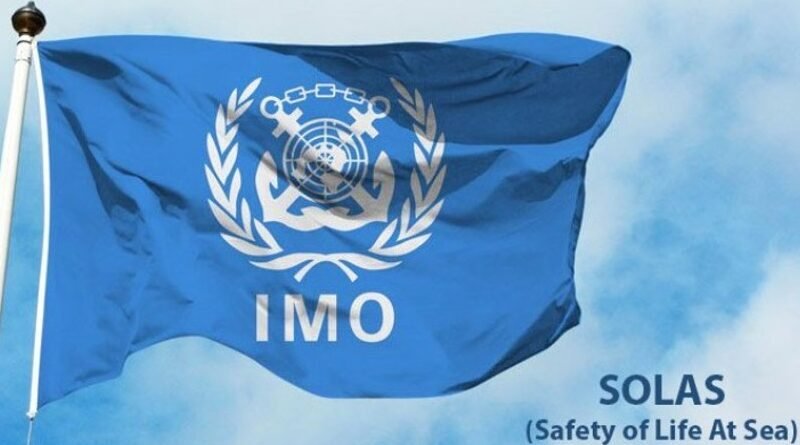
Blog: The SOLAS Convention and Maritime Law: Why Maritime Safety Starts With International Law
By Tooba Haider
The oceans drive the world economy. More than 80% of global trade moves by ship, and roughly 99% of transcontinental data traffic runs through cables laid on the ocean floor (Bueger & Edmunds, 2024). Behind every safe voyage lies an extensive body of maritime law, commonly known as maritime admiralty law, built to protect lives, cargo, and the marine environment. At the heart of that framework is the International Convention for the Safety of Life at Sea (SOLAS), widely regarded as the single most important treaty in maritime law and the cornerstone of modern maritime safety.
Maritime security, as a concept, covers the full range of dangers, hazards, and opportunities associated with the maritime domain. It gives states, shipping companies, and any maritime law attorney advising on cargo disputes, crew injury, or liability claims a shared framework for understanding and addressing maritime crime and insecurity, while also improving the management of ports, ships, and the welfare of those who depend on them.
Maritime safety spans ship collisions, fires, severe weather, equipment failure, and security threats such as piracy, which remains one of the most persistent challenges to maritime security operations in several regions of the world.
The Disaster that Changed Maritime History
SOLAS emerged directly from the sinking of RMS Titanic in 1912. The first International Convention for the Safety of Life at Sea was signed on 20 January 1914, after nearly two months of negotiation in London (Paulsen, 2026). Revised repeatedly since, it is now recognised as the most significant international agreement governing ship and human safety at sea.
The loss of more than 1,500 lives, the shortage of lifeboats, and the breakdown in emergency communication exposed serious gaps in maritime safety practice. The disaster shook public confidence worldwide and made clear that safety at sea could no longer be left to individual states acting alone. An internationally coordinated standard was needed. That realisation led directly to SOLAS.
SOLAS is therefore the foundation of maritime safety, setting minimum international requirements for ship construction, machinery, and operation. It also requires states to maintain effective search-and-rescue coverage and requires ships to assist those in distress without delay.
The SOLAS Convention
The idea of “freedom from unacceptable risk of harm” acknowledges that eliminating all risk at sea is not realistic. The goal instead is to identify, assess, and manage risk systematically so that it is reduced to a level society regards as acceptable.
Since its founding, the International Maritime Organization (IMO) has worked continuously to reduce risk at sea through binding legal instruments, chief among them the International Convention for the Safety of Life at Sea, 1974, as amended (SOLAS) (Joseph & Dalaklis, 2021).
As devastating as the Titanic disaster was, it became one of the pivotal moments in the history of maritime safety, prompting the international coordination that SOLAS still represents. Under IMO’s continuing oversight, SOLAS has been amended repeatedly, helping build a shipping industry that is safer, more environmentally responsible, and better equipped to serve global trade (Dalaklis, 2017).
SOLAS’s core purpose is to set minimum requirements for the construction, equipment, and operation of ships, in proportion to their safety needs. Flag states must confirm that vessels flying their flag meet these requirements, and the Convention prescribes specific certificates as evidence of compliance (Fransson, 2023). A ship and its equipment may also be examined by a contracting government (a process called port State control) where there are “clear grounds” to believe the vessel does not substantially comply with the Convention.
SOLAS has developed through a succession of landmark agreements adopted in 1914, 1929, 1948, and 1960, each reinforcing international standards for maritime safety. The breakthrough came with the 1974 SOLAS Convention, which introduced the “tacit acceptance” procedure: rather than requiring active ratification by a set number of states, amendments now enter into force automatically unless a specified number of member states formally object within a defined period (Zhang et al., 2023). This allowed SOLAS to respond quickly to new safety challenges and technological change, turning it into a living treaty rather than a static one.
Amendments to SOLAS continue to be managed by the IMO through structured entry-into-force cycles. Recent updates have focused on lifting-appliance safety, mandatory container-weight and loss reporting, restrictions on environmentally harmful fire-fighting foam, and stronger fire-safety requirements for ro-ro passenger ships (Hermann, 2024).
The Core Principles of SOLAS
SOLAS protects human life at sea by establishing comprehensive international standards covering ship construction, fire protection, life-saving equipment, navigation, and distress communication. Administered by the IMO, the Convention requires ships engaged in international voyages to meet strict structural, equipment, and operational standards before they may carry passengers or cargo. Through these mandatory requirements, SOLAS works to prevent maritime disasters and improve safety for vessels, crews, and passengers worldwide.
Ship Construction and Stability
- Watertight design: mandates compartments and bulkheads so a ship stays afloat even if its hull is damaged.
- Structural strength: requires vessels to withstand severe weather and rough seas without breaking apart (Tarannum, 2021).
Fire Safety and Protection
- Fire prevention: requires fire-resistant materials in walls, doors, and ceilings.
- Detection systems: requires automatic smoke alarms and rapid fire-extinguishing equipment in engine rooms and cabins.
Life-Saving Equipment and Training
- Emergency equipment: requires ships to carry enough lifeboats, life rafts, and life jackets for everyone on board.
- Regular drills: requires crew and passengers to practise emergency evacuation so they know what to do in a crisis.
Navigation and Radio Communication
- Distress systems: requires satellite beacons such as EPIRBs and SARTs, operating through the GMDSS network, to transmit rescue signals quickly.
- Collision avoidance: requires modern radar, GPS, and automatic tracking systems on all commercial vessels (IMO , 2018).
Cargo Safety
- Hazardous materials: sets clear rules for packing, stacking, and moving dangerous goods safely.
- Weight verification: requires accurate container-weight declarations to prevent a ship from capsizing or being overloaded (IMO, 2018).
Who Must Comply With SOLAS
SOLAS applies to flag states, shipping companies, and merchant ship owners under the terms of the IMO Convention.
Under the United Nations Convention on the Law of the Sea (UNCLOS), Article 91(1) assigns primary responsibility for compliance to the flag state, and Article 94 requires that state to take the steps necessary to ensure safety at sea (UN, 1982). Some flag states’ lax oversight has encouraged operators to register ships there specifically to cut costs, including crew-training standards (Godio, 2015).
Although some navigation-related provisions (SOLAS Chapter V) also apply to smaller recreational vessels, SOLAS mainly covers commercial and passenger vessels on international routes.
The IMO has long prioritised maritime safety standards (Chen et al., 2017). Its ongoing commitment is reflected in a family of regularly revised conventions, including SOLAS, the STCW (Standards of Training, Certification and Watchkeeping for Seafarers), and MARPOL (Prevention of Pollution from Ships), that evolve alongside the shipping industry. Even so, the sheer diversity of the maritime environment makes eliminating accidents a persistent challenge (Valdez Banda et al., 2016).
From International Rules to Port Inspections: How SOLAS is Enforced
Port State Control (PSC) is a key preventive mechanism the IMO uses to promote maritime safety. It allows Port State Control Officers (PSCOs) to inspect foreign vessels and their onboard systems to confirm compliance with relevant international conventions. At the EU level, Directive 2009/16/EC was introduced specifically to reduce substandard shipping in waters under Member States’ jurisdiction. PSC inspections typically verify certificates and documentation alongside an assessment of a vessel’s condition, equipment, and crew. Data collected through the nine regional Port State Control memoranda has also proved valuable for research into maritime safety (Rey-Charlo et al., 2023).
Communication systems are another essential element of maritime safety. Reliable, effective communication is essential for safe navigation and enables ships to respond appropriately to safety incidents and emergencies. The Officer of the Watch responsible for communications must therefore have sufficient knowledge and practical skill to operate the relevant systems effectively. In recent decades, technological progress has considerably strengthened the role radio communication plays in supporting navigation and maritime security (Mąka et al., 2017).
How the SOLAS Convention is Implemented around the World
The IMO relies on a dual system of flag state control and port state control to implement SOLAS globally. Signatory governments incorporate the treaty’s provisions into domestic law and hold the legal authority both to inspect and certify their own ships and to inspect foreign ships entering their ports.
Tacit Acceptance
Tacit acceptance describes agreement shown through inaction rather than an explicit vote. It matters because it speeds up international decision-making and helps norms take hold quickly, though it can also let subpar standards or ambiguity go unchallenged if states fail to object in time.
Before 1974, a single major maritime state could indefinitely block a safety improvement, since every SOLAS amendment required active ratification by a set percentage of countries. The tacit acceptance procedure reversed that default: silence now counts as agreement. This made SOLAS far more responsive, allowing the Convention to react to disasters, such as the sinking of the Estonia, within years rather than decades. Many IMO conventions now follow the same model (Canarslan, 2020).
Every commercial ship must carry the SOLAS certificates relevant to its category and trading area, which port state control officers check on boarding. An expired or missing certificate can result in a formal violation and, in some cases, detention of the vessel (Metuge, 2017).
Why the SOLAS Convention Still Matters Today
SOLAS remains the primary global agreement on maritime safety, setting minimum standards for the construction, equipment, and operation of merchant ships. SOLAS 1974 currently has 167 contracting states, which together flag about 99% of the world’s merchant shipping fleet by gross tonnage, making it one of the most widely adopted instruments in international maritime law (International Maritime Organization [IMO], 2018).
By establishing common rules for shipping, international conventions reduce friction between differing national regulations and create a more predictable framework for maritime operations. These standards also support supply-chain stability by protecting crew, vessels, and cargo, helping goods move efficiently across global waters. Port State Control further reinforces this framework by allowing authorities to inspect foreign vessels and confirm compliance with relevant safety and environmental requirements.
SOLAS’s continued development reflects the need for maritime safety rules to keep pace with the industry itself. Autonomous vessels are one of the clearest examples: as ships become capable of carrying out navigational and operational tasks with less human involvement, new questions arise about the role of the master and crew, remote oversight, preventive maintenance, and emergency response. The International Code of Safety for Maritime Autonomous Surface Ships (the MASS Code), adopted by the IMO in May 2026 and effective from 1 July 2026, establishes a safety framework for autonomous and remotely operated commercial vessels, aiming to ensure they meet equivalent standards of safety, security, and environmental protection as conventional ships (IMO, 2026).
Digital security has also become a core part of maritime safety. Modern ships rely heavily on interconnected data and operational technology across navigation, electronic communication, engine control, and cargo management. A cyberattack on any of these systems could directly endanger life by disrupting critical ship operations. The IMO’s digitalisation initiatives increasingly reflect the need for systems that are resilient to both cyberattacks and operational failure, and cyber-risk management is now integrated into its wider maritime safety work.
Climate change is likewise reshaping ship management and safe navigation. Shipping standards must adapt to more extreme weather, changing sea conditions, rising temperatures, and the introduction of alternative fuels.
Passenger safety remains one of SOLAS’s central goals. Passenger ships still require effective evacuation planning, fire safety, emergency communication, and life-saving equipment, and these requirements only grow more important as passenger vessels become larger and more technologically complex (Stefanidis et al., 2023). SOLAS continues to provide the global benchmark for protecting crew and passengers against both established and emerging maritime risks.
Finally, the continued growth of international trade underscores SOLAS’s ongoing relevance. Because ships move enormous volumes of cargo between countries, a major maritime accident can affect ports, logistics networks, financial systems, and marine ecosystems well beyond the vessel itself. As global shipping becomes more technologically advanced and interconnected, standardised worldwide safety requirements remain essential (Nikcevic Grdinic, 2015), and SOLAS supplies that shared regulatory foundation across the entire maritime sector.
Read:How Maritime Insurance Works: Coverage, Costs, and Key Risks for Shipowners
Pakistan and SOLAS
Pakistan’s Commitment to International Maritime Safety
Pakistan is one of the IMO’s 176 Member States. With a coastline exceeding 1,000 kilometres, Pakistan joined the IMO in 1958 and plays a significant role in regional maritime affairs. The country has signed more than 24 major international agreements on maritime safety and environmental protection and has served five terms on the IMO Council (Khan & Sadiq, 2022).
Positioned strategically along the Arabian Sea, Pakistan holds considerable underutilised potential in maritime trade. As global commerce increasingly depends on efficient, secure sea routes, ports have become central to economic growth, regional connectivity, trade integration, and economic resilience. Karachi Port, Port Qasim, and the developing Gwadar Port serve as Pakistan’s principal gateways to international markets, with Karachi Port offering direct connectivity to Europe, the United Kingdom, and the Gulf region (Azam & Alam, 2025). Karachi’s naturally deep, open waters also allow it to accommodate large mother vessels within the harbour itself, whereas some other ports require such vessels to remain offshore in deeper water.
The presence of large international mother vessels at Karachi Port can significantly benefit Pakistan’s cargo and maritime trade sectors by facilitating the movement of goods between Pakistan and global markets. Even so, challenges related to infrastructure, governance, regional geopolitics, and compliance with international maritime conventions continue to limit the full realisation of this potential.
Challenges Ahead: Strengthening Compliance for Safer Seas
Strengthening maritime compliance in developing countries faces serious obstacles, including limited resources, weak infrastructure, and a shortage of trained personnel, all of which raise safety risks and environmental hazards across global shipping lanes.
Several challenges can hinder maritime safety compliance, particularly when new ports are being established (Adams et al., 2021). Limited inspection capacity remains a major concern, driven by a shortage of trained safety inspectors and inadequate access to modern assessment equipment; weak oversight also makes it easier for violations to go undetected. Crew training presents a further challenge, since some local maritime training programmes may lag behind current standards, and falsified certification can mask genuine gaps in competence (Baig et al., 2024).
Read: What is Maritime Law? A Complete Guide to Maritime Admiralty Law and Shipping Regulations
Language barriers can also make communication more difficult for multinational crews. Ageing vessels pose a serious safety concern of their own: outdated engines, deteriorating hulls, and deferred maintenance driven by tight budgets make older ships more accident-prone, and such vessels can sometimes continue operating in regions with looser enforcement (Jiang et al., 2020).
Finally, technological limitations constrain the modernisation of maritime safety systems. High costs can slow the adoption of digital surveillance and cleaner technologies, unreliable internet access in remote areas can disrupt real-time data collection, and continued reliance on manual documentation can slow both port inspections and information-sharing between authorities.
SOLAS and World Maritime Day 2026
IMO Theme for 2026–2027: “From Policy to Practice: Powering Maritime Excellence”
Observed annually on the last Thursday of September (24 September 2026 this year), World Maritime Day was first held in 1978 to mark the 20th anniversary of the IMO Convention’s entry into force. For the first time, the IMO has set a two-year theme, chosen to emphasise that adopting a convention is only the first step: real safety gains depend on ratification, national legislation, trained inspectors, and consistent enforcement.
This theme speaks directly to the compliance gap described above. SOLAS has spent more than a century setting the standard on paper; the 2026–2027 theme is essentially the IMO’s own acknowledgement that turning that standard into everyday practice, through inspection capacity, crew training, and enforcement, is the work still ahead, everywhere else.
Milestones in the Evolution of SOLAS
| Year | Milestone |
| 1912 | RMS Titanic sinks; more than 1,500 lives lost. |
| 1914 | First SOLAS Convention signed in London by 13 states. |
| 1929 / 1948 / 1960 | Successive SOLAS revisions strengthen construction, fire, and life-saving standards |
| 1959 | IMO (originally IMCO) assumes responsibility for SOLAS. |
| 1974 | Current SOLAS Convention adopted, introducing the tacit acceptance procedure. |
| 2026 | IMO adopts the MASS Code for autonomous ships (in force 1 July 2026). |
Charting the Course Ahead
More than a century after it was established, the SOLAS Convention continues to protect lives and sustain trust in global shipping, providing a shared framework for safeguarding seafarers, passengers, vessels, and cargo. As maritime transport continues to evolve, sustained SOLAS compliance will remain essential to ensuring that safety standards keep pace with environmental and technological change. From its origins after the Titanic disaster to its ongoing adaptation to new technological, environmental, and security challenges, SOLAS demonstrates the value of internationally coordinated safety standards. Yet effective implementation depends on more than global rules; it requires strong enforcement, adequate inspection capacity, trained personnel, modern technology, and cooperation among maritime authorities. As international shipping continues to advance, strengthening SOLAS compliance will remain essential to safer, more resilient, and more sustainable maritime transport.
References
- Adams, N., Chisnall, R., Pickering, C., Schauer, S., Company Peris, R., & Papagiannopoulos, I. (2021). Guidance for ports: Security and safety against physical, cyber and hybrid threats. Journal of Transportation Security, 14(3–4), 197–225. https://doi.org/10.1007/s12198-021-00234-6
- Azam, M., & Alam, S. (2025). Unlocking maritime potential: The significance of ports in Pakistan’s seaborne trade. International Review of Social Sciences, 13(4), 26–34.
- Baig, M. Z., Lagdami, K., & Mejia, M. Q. (2024). Enhancing maritime safety: A comprehensive review of challenges and opportunities in the domestic ferry sector. Maritime Technology and Research, 6(3), 268911. https://doi.org/10.33175/mtr.2024.268911
- Bueger, C., & Edmunds, T. (2024). Understanding maritime security. Oxford University Press.
- Canarslan, G. (2020). Conclusion of the agency contract by tacit acceptance. Erciyes University Law Faculty Journal, 15(2), 305–324.
- Chen, J., Zhang, F., Yang, C., Zhang, C., & Luo, L. (2017). Factor and trend analysis of total-loss marine casualty using a fuzzy matter element method. International Journal of Disaster Risk Reduction, 24, 383–390. https://doi.org/10.1016/j.ijdrr.2017.07.001
- Dalaklis, D. (2017). Safety and security in shipping operations. In I. D. Visvikis & P. M. Panayides (Eds.), Shipping operations management (pp. 197–213). Springer. https://doi.org/10.1007/978-3-319-62365-8_9
- Fransson, M. (2023). The International Convention for the Safety of Life at Sea (SOLAS). In Research handbook on maritime law. Edward Elgar Publishing. https://doi.org/10.4337/9781802206883.00018
- Godio, L. M. A. (2015). La Convención de las Naciones Unidas sobre el Derecho del Mar de 1982 y las actividades militares. Revista de la Facultad de Derecho, 39, 97–118. https://doi.org/10.22187/201524
- Hermann, W. (2024). Impact of bulk carrier disasters on the amendments to the SOLAS Convention. TransNav: International Journal on Marine Navigation and Safety of Sea Transportation, 18(2), 287–294. https://doi.org/10.12716/1001.18.02.03
- International Maritime Organization. (2018). SOLAS consolidated edition 2018: Consolidated text of the International Convention for the Safety of Life at Sea, 1974, and its Protocol of 1988: Articles, annexes and certificates. International Maritime Organization.
- International Maritime Organization. (2026, May 22). IMO adopts first global Code for autonomous ships. IMO.
- Jiang, M., Lu, J., Yang, Z., & Li, J. (2020). Risk analysis of maritime accidents along the main route of the Maritime Silk Road: A Bayesian network approach. Maritime Policy & Management, 47(6), 815–832. https://doi.org/10.1080/03088839.2020.1730010
- Joseph, A., & Dalaklis, D. (2021). The international convention for the safety of life at sea: Highlighting interrelations of measures towards effective risk mitigation. Journal of International Maritime Safety, Environmental Affairs, and Shipping, 5(1), 1–11. https://doi.org/10.1080/25725084.2021.1880766
- Khan, M. Z., & Sadiq, M. F. (2022). Non-traditional security threats in maritime zones of Pakistan and law enforcement by PMSA: An overview. Polaris – Journal of Maritime Research, 4(1), 1–26. https://doi.org/10.53963/pjmr.2022.005.4
- Mąka, M., Majzner, P., & Lisaj, A. (2017). Radiocommunication event allocation model for a selected sea area. Scientific Journals of the Maritime University of Szczecin, 50(122), 52–58. https://doi.org/10.17402/216
- Metuge, D. N. (2017). A critical review of the incorporation of SOLAS survey and certification standards in South African law. South African Yearbook of International Law, 42(1). https://doi.org/10.10520/EJC-11ef0d13d2
- Nikcevic Grdinic, J. (2015). Legal regulations in the function of ensuring ship safety. Pomorstvo, 29(1), 30–39. https://hrcak.srce.hr/140204
- Paulsen, G. (2026). “Proceed to the assistance of the persons in distress”: The sinking of the Titanic and the international regulation of safety of life at sea. International Journal of Maritime History, 38(1), 116–129. https://doi.org/10.1177/08438714251412652
- Rey-Charlo, R. E., Cueto, J. L., & Piniella, F. (2023). Analyzing port state control data to explore future improvements to GMDSS training. Journal of Marine Science and Engineering, 11(12), 2379. https://doi.org/10.3390/jmse11122379
- Stefanidis, F., Stefanou, E., Boulougouris, E., Karagiannidis, L., Sotiralis, P., Annetis, E., Balet, O., & Veltsistas, P. (2023). SafePASS: A new chapter for passenger ship evacuation and marine emergency response. Transportation Research Procedia, 72, 3885–3892. https://doi.org/10.1016/j.trpro.2023.11.493
- Tarannum, N. (2021). The legal standpoint of SOLAS Convention for maritime safety and security. South Asian Journal of Law and Policy, 1, 107–123.
- United Nations. (1982). United Nations Convention on the Law of the Sea. United Nations Treaty Series, 1834, 3.
- Valdez Banda, O. A., Goerlandt, F., Kuzmin, V., Kujala, P., & Montewka, J. (2016). Risk management model of winter navigation operations. Marine Pollution Bulletin, 108(1–2), 242–262. https://doi.org/10.1016/j.marpolbul.2016.03.071
- Zhang, W., Qiao, X., Gao, X., & Sun, M. (2023). Review on the development of international ship damage stability based on the SOLAS Convention system. Ship & Boat, 34(3), 35–43. https://doi.org/10.19423/j.cnki.31-1561/u.2023.03.035

Ms. Tooba Haider holds a Master’s degree in Microbiology, with expertise in microbial sciences, environmental microbiology, and research-based scientific writing. Her interests focus on microbiological research and the role of microorganisms in environmental and public health challenges. She can be contacted at toobaammar16823@gmail.com.
The views and opinions expressed in this article are solely those of the author and do not necessarily reflect the views of Maritime Current News.