U.S. Coast Guard Suspends Search for Nine Missing Boaters in Federated States of Micronesia
The U.S. Coast Guard has suspended its active search and rescue (SAR) operation for a missing vessel carrying nine people in the Hall Islands of the Federated States of Micronesia (FSM) after a 10-day multinational maritime search covering approximately 25,000 square nautical miles and more than 31 search patterns.
U.S. Coast Guard Forces Micronesia suspended the search on August 9, 2026, following an extensive coordinated response involving U.S. military units, FSM maritime authorities and commercial vessels participating in the Automated Mutual-Assistance Vessel Rescue (AMVER) System. The operation highlights the scale and complexity of maritime search and rescue, ocean surveillance and emergency response operations across the remote Pacific.
According to the U.S. Coast Guard, watchstanders at the U.S. Coast Guard Joint Rescue Sub-Center (JRSC) Guam were notified at approximately 10 a.m. on July 31, 2026, that a 20-foot skiff traveling within the Hall Island Atoll had failed to return to Ruo Island as scheduled on July 30.
Following the notification, Coast Guard watchstanders coordinated with local and international partners, issued maritime safety broadcasts and identified available search assets to support the operation. The resulting search effort extended across a vast area of the Pacific, demonstrating the significant logistical and operational demands associated with maritime emergency response in remote waters.
U.S. and International Assets Supported Search Operation
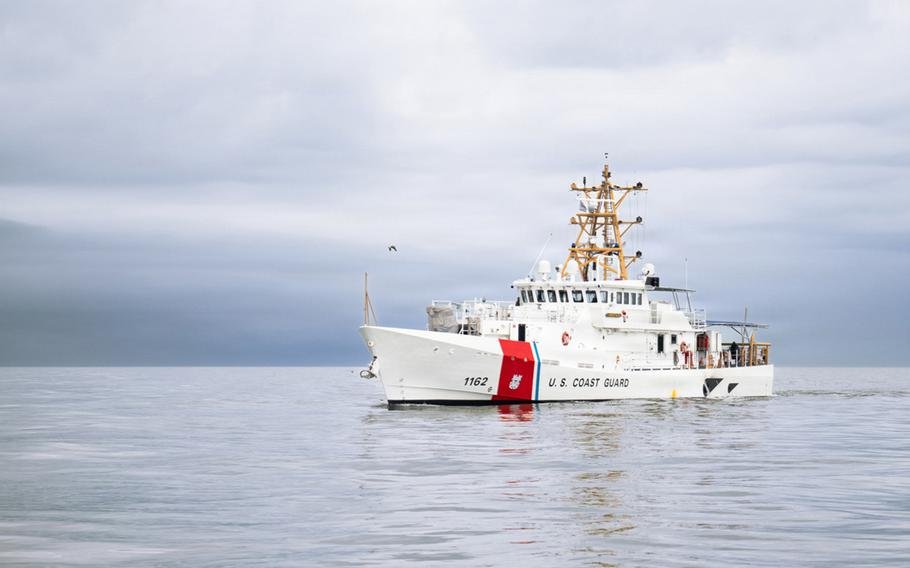
The search operation involved multiple aircraft, vessels and maritime response organizations. Participating assets included the U.S. Coast Guard Joint Rescue Sub-Center Guam, U.S. Coast Guard Cutter Vincent Danz (WPC 1162) and a U.S. Coast Guard C-130 from Coast Guard Air Station Barbers Point in Kapolei, Hawaii.
The U.S. Air Force Air Mobility Command C-130 from Andersen Air Force Base, Guam, also participated, alongside two U.S. Navy P-8 Poseidon aircraft operating from Kadena Air Base in Okinawa, Japan.
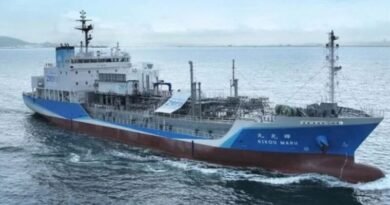
The Federated States Ship Tosiwo Nakayama from Pohnpei, FSM, was also involved in the operation. Two commercial vessels, Fermament Ace and Hikari 1, additionally provided assistance through the Automated Mutual-Assistance Vessel Rescue (AMVER) System, under which commercial vessels voluntarily assist with high-seas search and rescue operations.
Lt. Adeeb Ahmad, search and rescue mission coordinator with Coast Guard Forces Micronesia/Sector Guam, said the Coast Guard made the difficult decision to suspend its active search and expressed sympathy to the families and loved ones of those missing. He also thanked the U.S. and international military partners involved in the operation.
Maritime Search Highlights Importance of Regional Cooperation
The operation demonstrates how maritime search and rescue coordination increasingly depends on cooperation among coast guards, naval forces, aircraft operators, local maritime authorities and commercial shipping companies. In geographically dispersed regions such as Micronesia, the enormous distances between islands can make rapid response particularly challenging.
The involvement of commercial vessels through AMVER is particularly significant for maritime safety and emergency response. Commercial ships already operating across international waters can provide an additional layer of assistance when dedicated search-and-rescue assets are distant from an incident.
What the Operation Reveals About Pacific Maritime Safety
From a maritime-security and operational perspective, the 10-day search illustrates the difficulty of conducting large-area ocean search operations when a vessel’s last known location is within a remote island environment. A search covering 25,000 square nautical miles requires the integration of aviation assets, surface vessels, communications networks and coordinated search patterns rather than reliance on a single rescue platform.
The operation also demonstrates the strategic importance of maritime domain awareness (MDA) in the Pacific. Early notification, accurate information about a vessel’s intended route, timely maritime safety broadcasts and the availability of tracking and communication systems can significantly influence the effectiveness of search-and-rescue operations.
For commercial shipping and maritime insurers, such incidents also reinforce the importance of vessel tracking, voyage planning, communications equipment, emergency preparedness and maritime risk management. In remote waters, even a relatively small vessel can become difficult to locate when communication is lost or when the vessel deviates from its planned route.
The participation of U.S. Coast Guard, U.S. Navy, U.S. Air Force, FSM and commercial maritime assets further demonstrates that international maritime cooperation is essential for managing emergencies across the vast Pacific Ocean. The case provides another example of how civilian and military maritime capabilities can operate together during a high-stakes search-and-rescue response.
The suspension of the active search does not change the scale of the effort undertaken. Over 10 days, participating organizations conducted more than 31 search patterns across approximately 25,000 square nautical miles, reflecting a substantial multinational commitment to maritime safety and search-and-rescue operations.
Read:U.S. Coast Guard Rescues Two Boaters Near Coquille River Jetty