Odesa Seaport Damaged in Russian Overnight Strike as Black Sea Shipping Faces Rising Security Risks
Ukraine’s Odesa seaport was damaged in an overnight Russian missile and drone attack, intensifying concerns over Black Sea maritime security, port infrastructure, shipping operations and global food security. Ukrainian President Volodymyr Zelenskiy said the strike targeted Odesa and other Ukrainian regions, while Russian authorities said fuel storage facilities at the ports of Odesa and nearby Chornomorsk were among the targets.
Odesa’s seaports are a major maritime gateway for Ukraine’s agricultural exports, making damage to port infrastructure strategically important for international trade. Local authorities reported that dozens of drones and missiles struck the southern Ukrainian port city, injuring about a dozen people. Zelenskiy said eight people were wounded in Odesa.
Odesa Port Attack Raises Maritime Security Concerns
The latest attack highlights the continuing vulnerability of Black Sea ports and commercial shipping infrastructure during the Russia-Ukraine war. Odesa is central to Ukraine’s maritime export network, particularly for agricultural commodities moving toward international markets.
Zelenskiy accused Russia of putting global food security at risk by attacking infrastructure connected with Ukraine’s agricultural exports. The Ukrainian president also said Russia had attacked nine other Ukrainian regions.
Russia’s Defence Ministry said its forces struck fuel storage facilities in the ports of Odesa and Chornomorsk, claiming the facilities were being used in support of the Ukrainian military. This remains the Russian side’s stated justification for the strikes.
Energy Infrastructure Adds Pressure on Port Operations
The attack also affected the energy infrastructure serving the Odesa region. Ukraine’s energy ministry said Russian strikes on power facilities caused a significant number of people in the port city to lose electricity overnight. Electricity was subsequently restored to 90,000 consumers.
The incident demonstrates the close relationship between energy security and maritime logistics. Ports depend on electricity and supporting infrastructure for cargo handling, storage, communications, security systems and other essential activities. Damage to power infrastructure can therefore create operational challenges even when individual port facilities are not directly destroyed.
Ukraine’s state oil and gas company Naftogaz separately reported a significant increase in attacks against its facilities over the previous three days. Oil extraction facilities were also reported to have come under attack overnight.
Black Sea Shipping Remains Under Threat
The latest strike comes amid continuing attacks by both sides against logistics and energy infrastructure. Russia has repeatedly targeted Odesa as part of its efforts to restrict Ukraine’s access to the Black Sea.
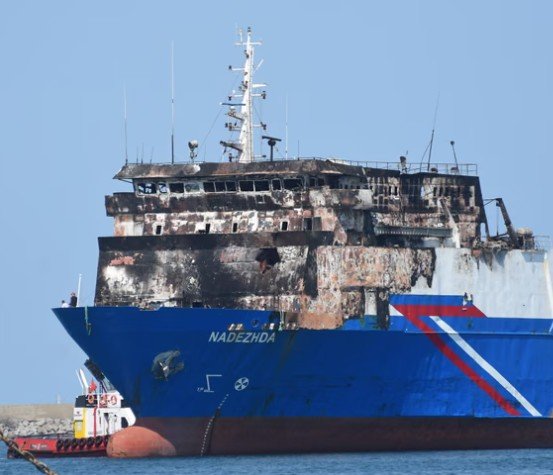
Ukraine has also attacked Russian oil tankers and other cargo vessels in the Black Sea, seeking to disrupt Russian revenues that Kyiv says help finance the war. Ukraine claimed three additional strikes against such vessels on Sunday.
For the shipping industry, the situation creates a difficult operating environment in which commercial vessels, port infrastructure, fuel facilities and maritime supply chains can all become exposed to conflict-related risks.
The security situation can affect vessel planning, cargo movements, insurance considerations and the reliability of maritime logistics through the region.
Port Infrastructure and Agricultural Trade
The strategic importance of Odesa extends beyond Ukraine’s domestic economy. Its ports provide an important route for agricultural products reaching international markets.
Any prolonged disruption to port operations, cargo handling, fuel availability or electricity supplies could reduce the efficiency of the maritime export chain. For agricultural commodities, delays at a major export gateway can have consequences for exporters, shipping companies, commodity traders and import-dependent markets.
This makes the protection and resilience of port infrastructure an increasingly important issue for global maritime trade and food security.
Wider Attacks Target Logistics and Energy Facilities
The conflict has increasingly involved attacks against logistics and energy assets away from conventional battlefield positions. E-commerce warehouses and Ukrainian petrol stations have also been targeted during the summer, while energy facilities on both sides have faced repeated attacks.
The pattern illustrates how modern conflicts can disrupt interconnected transport, energy and supply-chain networks. For maritime economies, damage to supporting infrastructure can be as consequential as direct damage to a port terminal because shipping depends on a wider network of energy, storage and land-transport connections.
Casualties Reported in Ukraine and Russia
The overnight attacks also affected other areas.In Ukraine’s eastern city of Kharkiv, three people were killed and 37 wounded after a multi-storey apartment building was hit.
In Russia’s Belgorod region, authorities initially reported that five people were killed and 25 wounded in a Ukrainian drone attack. Subsequent reporting said the death toll later increased, making casualty figures subject to updates as emergency operations continued.
Pope Leo Calls for an End to the War
Pope Leo renewed his appeal for an end to the conflict during Sunday’s Angelus prayer at the Vatican. He warned about the continuing civilian toll and the growing number of victims, including children.
Why Odesa Matters to Global Shipping
The Odesa attack illustrates an important principle of maritime security: a port is not an isolated facility. It is part of a larger logistics ecosystem connecting ships, cargo terminals, fuel storage, electricity networks, inland transport and international markets.
Odesa’s importance to agricultural exports means that disruption to its maritime infrastructure can extend beyond Ukraine. If port operations become less predictable, shipping companies and cargo interests may face higher operational risks, additional costs and greater uncertainty over cargo schedules.
The targeting of energy and fuel-related infrastructure is particularly significant because maritime trade depends on reliable supporting services. A port can have functioning berths and terminals but still experience operational disruption if electricity, fuel storage or connected logistics systems are damaged.
The continuing attacks on vessels and port infrastructure also underline the changing nature of Black Sea shipping risks. Commercial maritime activity is increasingly operating in an environment where geopolitical conflict, port security, energy infrastructure and supply-chain resilience are closely connected.
From a global perspective, the Odesa situation is therefore more than a regional port-security issue. It demonstrates how conflict around a major agricultural export gateway can create risks for international shipping, maritime logistics, commodity supply chains and global food security.
Read:Three Crew Injured in Drone Strike on Cargo Ship Near Novorossiysk Port