UAE Condemns Missile Attack on ADNOC-Linked Vessel in Strait of Hormuz
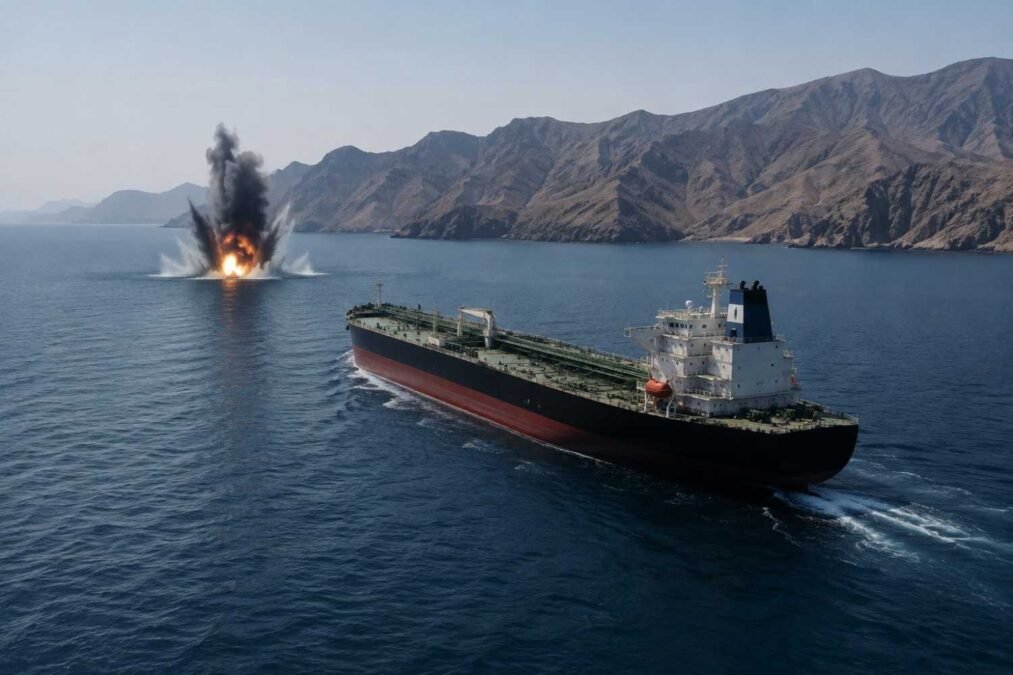
The United Arab Emirates has condemned a missile attack targeting a vessel affiliated with Abu Dhabi National Oil Company (ADNOC) while it was transiting the Strait of Hormuz on Saturday, August 8. ADNOC confirmed that the vessel was targeted during the early hours of the day, with no injuries reported and the situation brought under control.
The company urged the public to obtain information exclusively from official sources and avoid spreading rumors or unverified reports, according to the UAE’s official Emirates News Agency (WAM).
The UAE Ministry of Foreign Affairs separately condemned the incident, describing the targeting of commercial shipping in the strategic waterway as a serious threat to regional stability, UAE security and global energy supplies. Abu Dhabi said the incident constitutes a flagrant violation of United Nations Security Council Resolution 2817, which strongly condemns attacks against merchant and commercial vessels and rejects actions that threaten freedom of navigation or interfere with international maritime routes.
The UAE called on Iran to stop such attacks and comply with its international obligations, including restoring unrestricted and safe navigation through the Strait of Hormuz. The ministry also said attacks on commercial vessels could amount to economic coercion or an economic act of aggression.
Strait of Hormuz Security Becomes a Global Shipping Concern
The incident places renewed attention on the vulnerability of commercial shipping and energy transportation through the Strait of Hormuz, one of the world’s most important maritime chokepoints. The waterway is vital to international energy trade, making its security closely connected with global energy markets, maritime logistics and supply-chain stability.
For shipping companies, the principal concern is not only physical damage to vessels but also the wider commercial consequences of increased security risks. Higher war-risk insurance premiums, vessel security costs, voyage uncertainty and potential route adjustments can increase the cost of transporting energy and other commodities.
The strategic importance of the waterway means that sustained disruption could extend beyond the Gulf. Greater uncertainty around vessel movements can affect freight markets, energy prices and delivery schedules, creating pressure across international supply chains.
Impact on Maritime Security and Commercial Shipping
From a maritime-security perspective, the attack demonstrates how geopolitical tensions can directly affect merchant vessels operating on major international trade routes. Even when an incident results in no casualties, the threat itself can influence decisions by shipowners, operators, insurers and charterers.
UN Security Council Resolution 2817 reinforces the international legal principle that merchant and commercial vessels should be able to exercise navigational rights and freedoms. Maintaining that principle is particularly important in chokepoints where a disruption can affect international trade well beyond the surrounding region.
The vessel involved has not been publicly identified by the UAE, and authorities have not disclosed further details about the missile used in the attack.
The immediate outcome of the incident was limited, with no injuries reported and the situation brought under control. Its wider significance, however, depends on whether the attack remains an isolated event or forms part of a continuing pattern targeting commercial shipping.
For the maritime industry, repeated incidents would likely increase operational uncertainty and could encourage shipowners and energy companies to strengthen risk assessments, voyage planning and onboard security measures. Insurers could also reassess exposure to vessels operating in high-risk areas.
The incident therefore highlights a central challenge for global shipping: keeping strategic maritime chokepoints open and commercially predictable during periods of geopolitical tension. Continued safe passage through the Strait of Hormuz remains important not only for Gulf states but also for international energy security, maritime trade and global supply-chain resilience.
Read: Two Tanker Incidents near Oman Raise Strait of Hormuz Maritime Security Concerns