Ulysses Partners with Seabed 2030 to Accelerate Autonomous Ocean Mapping and Global Seabed Data Collection
The Nippon Foundation-GEBCO Seabed 2030 Project has announced a strategic partnership with Ulysses, an innovative ocean technology company, to accelerate autonomous seabed mapping and expand the global collection of bathymetric data. The collaboration is expected to strengthen worldwide efforts to map the entire ocean floor using advanced autonomous marine systems, supporting sustainable ocean management and the growing blue economy.
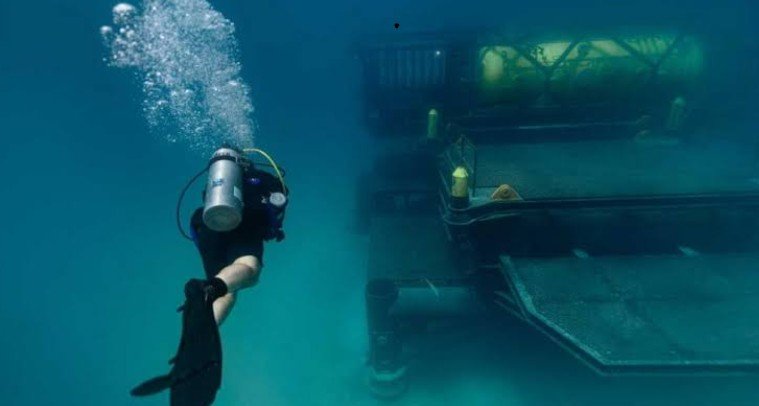
Founded in 2023, Ulysses develops networked fleets of autonomous surface and underwater vehicles equipped with advanced sensors, robotics, and data collection technologies. These intelligent marine systems are designed to operate across large ocean areas and support critical applications such as seabed mapping, environmental monitoring, habitat restoration, offshore surveys, and ocean exploration. By combining autonomous navigation with scalable ocean observation, the company aims to improve the efficiency and coverage of marine data collection.
The Seabed 2030 Project is a global initiative jointly led by The Nippon Foundation and the General Bathymetric Chart of the Oceans (GEBCO). The project seeks to inspire the complete mapping of the world’s ocean floor and integrate all available bathymetric information into the freely accessible GEBCO Ocean Map. The initiative is officially recognized as a UN Ocean Decade Decade Action and is supported through GEBCO, a joint program of the International Hydrographic Organization (IHO) and the Intergovernmental Oceanographic Commission (IOC) of UNESCO. GEBCO remains the only international organization with a mandate to map the entire seabed.
As autonomous marine technologies continue to evolve, they are creating new opportunities to collect high-quality ocean data more efficiently and across previously inaccessible regions. Through this partnership, Seabed 2030 and Ulysses will explore how autonomous marine robotics can accelerate the acquisition and sharing of bathymetric information, helping improve scientific understanding of the seafloor while supporting maritime navigation, marine conservation, offshore infrastructure planning, and climate research.
Seabed 2030 Director Jamie McMichael-Phillips said much of the world’s ocean remains unmapped, making innovative approaches essential for accelerating progress. He noted that autonomous technologies offer scalable and efficient solutions for collecting bathymetric data, particularly in areas that have traditionally been difficult to survey, and welcomed Ulysses as a partner in advancing global ocean mapping efforts.
Akhil Voorakkara, CEO and Co-Founder of Ulysses, said that understanding the ocean is fundamental to responsible ocean stewardship. He added that autonomous systems have the potential to significantly expand both the scale and persistence of ocean observation, expressing confidence that the partnership with Seabed 2030 will help improve humanity’s understanding of the world’s oceans through innovation and collaboration.
All bathymetric data collected and contributed through the partnership will be incorporated into the free and publicly available GEBCO global grid, ensuring that researchers, governments, hydrographic agencies, and the wider maritime community have access to valuable ocean mapping information that supports safer navigation and sustainable marine development.
Read: Global Maritime Leaders Head to Monaco for High-Stakes Ocean Mapping Summit 2026