Vietnam Boosts High-Tech Offshore Aquaculture Investment
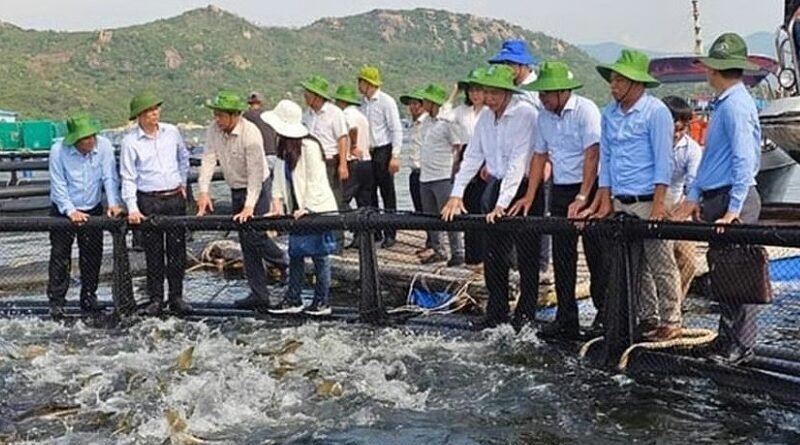
Vietnam is expanding high-tech offshore aquaculture as businesses invest in modern farming systems and industrial production. The growing marine aquaculture sector is also seeking clearer planning, secure sea-use rights, technical standards and stronger support to increase production and seafood exports.
Resolution 20-NQ/TW identifies marine aquaculture as a breakthrough direction, with Vietnam moving strongly toward industrial, high-tech and offshore farming. The sector requires suitable breeding stock, advanced technology, reliable markets and stable rights to use marine areas to support long-term investment.
Breeding Stock and Technology Drive Offshore Farming
Le Huu Tinh, Deputy Director of Dac Loc Seafood Company in Dak Lak Province, said breeding stock and technology are the key factors in expanding marine aquaculture into offshore areas.
According to Tinh, breeding stock must adapt well to offshore conditions, grow quickly, meet market demand and minimize disease risks. Dac Loc Seafood has selected yellowtail pompano and cobia as two strategic species.
To withstand offshore waves and winds, the company has adopted high-density polyethylene (HDPE) cages, biotechnology, cage-data digitization and modern operating equipment.

The company aims to develop an industrial marine aquaculture model by 2045, producing large-scale commodities and creating what it describes as “large sample fields at sea.” The objective is to provide sufficient raw materials for processing and direct export.
In the short term, Dac Loc Seafood is targeting 1,000 metric tons of commercial fish annually by 2030. It also plans to establish origin traceability from production areas to consumers and expand export markets.
Tinh said delayed implementation of planning has left businesses without a clear basis for obtaining water surfaces, defining farming areas and making long-term investments.
He said planning needs to be more specific, particularly for broodstock farming areas, to help businesses secure reliable supplies of quality breeding stock.
Quang Ninh Moves Toward Industrial Marine Aquaculture
The shift toward larger-scale marine aquaculture is also taking place in other Vietnamese localities.
In Quang Ninh, marine farming is moving from small-scale operations toward industrial production. The province has allocated more than 45,000 hectares of sea surface for integration into the Quang Ninh Master Plan for 2021–2030, with a vision to 2050.
Quang Ninh has also proposed an additional nearly 95,000 hectares, which would bring the total planned marine aquaculture area to nearly 140,000 hectares.
In Van Don, Cuong Hoa Cooperative has replaced wooden cages with HDPE cages for yellowtail pompano farming.
According to cooperative director Nguyen Van Cuong, after 10 months of stocking, production reached more than 19 kg per cubic meter. Profits increased by 13 percent compared with traditional methods, while pollution and disease were reduced.
Also in Van Don, STP Group Joint Stock Company has partnered with 21 cooperatives to establish a closed production chain covering farming areas, preliminary processing and export.
The company plans to use improved HDPE cages, renewable energy and circular-economy practices to reduce emissions while incorporating experiential tourism.
STP Group has proposed preferential credit specifically for high-tech marine aquaculture, shorter licensing and environmental procedures, and national technical standards and regulations.
Hai Phong Plans Larger Offshore Operations
Hai Phong City is reorganizing aquaculture production toward concentrated operations across more than 23,900 hectares of water surface.
Tien Lang Ward has nearly 1,900 hectares designated for mollusk farming, while brackish-water areas focus on key species including giant tiger prawn and whiteleg shrimp.
Under the city’s marine aquaculture development plan through 2030, with a vision to 2045, cage fish farming in Cat Hai will be stabilized, while industrial offshore aquaculture will be developed in Cat Ba–Bach Long Vi.
The plan is also linked to protecting sea and island sovereignty.
Hai Phong has requested central government support for coastal and offshore aquaculture infrastructure, technology conversion and the expansion of production scale and value.
Industry Perspective: Clear Sea-Use Rights Could Unlock Investment
Nguyen Huu Dung, Chairman of the Vietnam Marine Aquaculture Association, said farmers need long-term sea-area usage rights and a clear system of standards and regulations to make major investments and adopt modern technology with greater confidence.
Vietnam currently has nearly 10,000 marine aquaculture facilities, but most are concentrated within three nautical miles and largely use traditional technology.
Read:Jazan Shrimp Fishing Season Begins, Boosting Aquaculture, Fisheries and Food Security
Several projects using Recirculating Aquaculture Systems (RAS), Integrated Multi-Trophic Aquaculture (IMTA), HDPE cages and offshore farming beyond three nautical miles have shown positive results.
The development of these projects points to growing opportunities for high-tech aquaculture investment, although clearer marine planning and regulatory frameworks remain important for large-scale expansion.
New Standard Targets Large-Scale Marine Farms
Tran Dinh Luan, Director General of the Department of Fisheries and Fisheries Surveillance, said marine aquaculture has progressed, but production organization remains weak.
A Vietnamese Standard for industrial marine aquaculture facilities is now being drafted by the Department of Fisheries and Fisheries Surveillance. The department gathered feedback from experts in late June 2026.
The proposed standard is expected to establish a unified framework for the planning, design, construction, operation and management of large-scale marine farms.
It is also intended to attract investment, support the development of aquaculture insurance and improve risk management across the production chain.
Offshore Aquaculture Seen as a Pillar of the Blue Economy
Phung Duc Tien, former Deputy Minister of Agriculture and Environment, said industrial marine aquaculture is a pillar of Vietnam’s sustainable marine economic development strategy.
The sector is expected to help reduce pressure on coastal exploitation, increase seafood export value and strengthen the position of Vietnamese seafood.
Tien said standards and regulations should be issued soon to attract capable companies with advanced technology into offshore aquaculture.
Read:Pakistan Plans 100-Acre Mariculture Investment Estate to Boost Aquaculture and Fisheries Exports
Vietnam’s Offshore Aquaculture Outlook
Vietnam’s expansion of high-tech offshore aquaculture is bringing together modern cage systems, biotechnology, digital monitoring and new production models. HDPE cages, RAS, IMTA, renewable energy and circular-economy approaches are all emerging within the country’s marine farming development.
The sector’s next stage will depend on the implementation of marine planning, secure sea-use rights, technical standards and investment conditions.
For Vietnam’s seafood industry, the expansion could support larger-scale production, stronger traceability and increased seafood exports, while contributing to the country’s wider sustainable blue economy.
Read:SSA Urges NOAA to Protect Traditional Fishing Grounds as NOAA Plans Next Offshore Aquaculture Areas