US Maritime Interdiction Intensifies: US Navy Targets Iran Dark Fleet Vessels, Seizes Oil Tankers in Indian Ocean
The United States has reaffirmed its commitment to aggressive maritime interdiction operations aimed at enforcing sanctions on Iran, with senior military officials confirming that actions against so-called “dark fleet” vessels will continue across key global shipping routes.
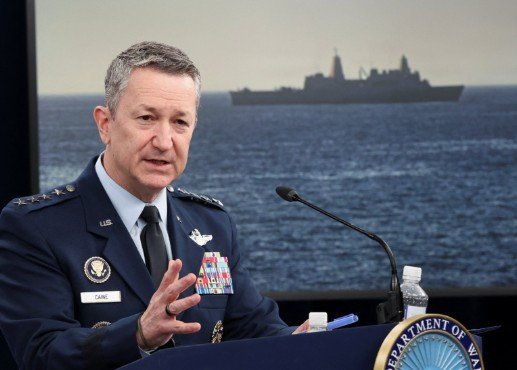
During a high-level Pentagon briefing, Chairman of the Joint Chiefs of Staff, General Dan Caine, outlined the latest developments in the ongoing naval enforcement campaign. He emphasized that the U.S. military remains fully prepared to sustain a strict maritime blockade on vessels linked to Iranian oil trade and is ready to escalate operations if directed by the President.
According to General Caine, the blockade—implemented under presidential authority and supported by the U.S. Department of Justice—targets commercial vessels moving to and from Iranian ports. Since April 8, U.S. forces have expanded interdiction operations worldwide, focusing on sanctioned shipments and vessels operating under opaque ownership structures commonly referred to as the “dark fleet.”
Providing operational insights, Caine revealed that 34 ships have already encountered U.S. naval enforcement measures and opted to change course rather than face interception, signaling the growing effectiveness of the blockade strategy.
One of the most notable incidents involved the motor vessel Touska, which was seized following multiple warnings. U.S. Marines executed a rapid airborne boarding operation using helicopter insertion techniques, successfully taking control of the vessel. Officials confirmed that both the ship and its crew remain safe under U.S. custody.
Similar enforcement actions have extended into the Indo-Pacific and Indian Ocean regions. On April 20, U.S. forces intercepted the motor tanker Tiffany, a very large crude carrier reportedly transporting around 2 million barrels of sanctioned Iranian oil. Just two days later, another vessel—Majestic X, also known as Ponix—was seized in the Indian Ocean under comparable circumstances.
Both tankers, along with their crews, are currently under U.S. control, with military authorities signaling that such operations will continue as part of a broader effort to disrupt illicit oil transportation networks.
General Caine further stressed that the U.S. Central Command is enforcing the blockade without exception, applying it to vessels of all nationalities transiting Iranian waters or ports. He noted that naval forces are actively monitoring and tracking ships of interest, including those that were outside the initial blockade zone but are now moving toward or away from Iranian territory.
In addition to operational updates, Caine commemorated the victims of the April 18, 1983, U.S. Embassy bombing in Beirut, describing it as a defining moment in attacks against American personnel. He paid tribute to those who lost their lives, including four U.S. service members, underscoring the continued importance of vigilance in global security operations.
Read: Strait of Hormuz Seizures Trigger Global Maritime Alarm as Iran Escalates Naval Operations
The Pentagon concluded the briefing by recognizing the dedication of U.S. military personnel and their families, highlighting the resilience and commitment demonstrated in sustaining complex maritime security missions across international waters.