Germany–US Tensions Ease as Merz Downplays Rift Amid NATO Troop Withdrawal and Rising Geopolitical Pressure
Germany is attempting to calm growing concerns over transatlantic tensions after the United States announced a planned reduction of its military presence in Europe, including a significant troop drawdown from Germany, one of NATO’s most strategically important hubs.
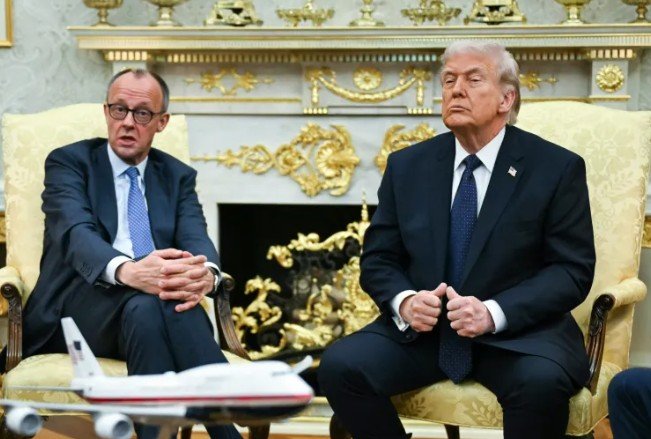
German Chancellor Friedrich Merz has moved to ease speculation of a diplomatic breakdown with Washington, stating that recent political disagreements with US President Donald Trump over Iran policy are “not connected” to the Pentagon’s decision to reduce troop levels.
Speaking to German broadcaster ARD, Merz reaffirmed the importance of the alliance, saying the United States remains “the most important partner within NATO,” despite recent friction.
US troop withdrawal from Germany signals strategic shift in NATO presence
The US Department of Defense, under Defence Secretary Pete Hegseth, has ordered the withdrawal of approximately 5,000 American troops from Germany over the next 12 months, reducing the US footprint in the country by nearly 14%.
Germany currently hosts around 36,000 US troops, the largest American military presence in Europe. Italy and the United Kingdom follow with approximately 12,000 and 10,000 troops respectively.
The decision comes at a time of heightened geopolitical sensitivity in Europe, with NATO allies closely watching shifts in US military posture across key maritime and land corridors.
Iran conflict comments fuel diplomatic friction
Tensions escalated earlier when Chancellor Merz appeared to criticise US and Israeli actions in Iran, suggesting that Washington’s strategy lacked a clear exit plan. His comments, describing Iran’s actions as “humiliating” for the US, sparked a sharp response from President Trump, who publicly dismissed Merz’s remarks and questioned his understanding of the situation.
Although Germany’s Foreign Minister Johann Wadephul later attempted to clarify the statement, the diplomatic impact lingered in Washington, contributing to renewed debate over NATO unity and coordination in Middle East conflicts.
Trade pressure and maritime security concerns add to strain
Alongside military adjustments, President Trump also announced new tariffs on European Union automobile exportsan economic move that particularly affects Germany, the EU’s largest car producer.
The broader geopolitical landscape is also being shaped by maritime security concerns, including tensions around the Strait of Hormuz, a critical global shipping chokepoint for oil and energy trade routes. Several ,European nations, including Spain, have opposed deeper involvement in regional military escalation, further highlighting divisions within NATO.
Spain, which hosts around 4,000 US troops, has even restricted US military airspace access amid the Iran conflict, reflecting widening differences in strategic priorities across the alliance.
NATO under pressure as Europe increases defence autonomy
Despite tensions, NATO officials maintain that cooperation with the United States remains central to European security. However, internal voices are increasingly calling for greater independence.
German Defence Minister Boris Pistorius described the US troop reduction as “foreseeable,” adding that Europe must assume “greater responsibility for its own defence capabilities.”
NATO spokesperson Allison Hart confirmed ongoing coordination with Washington to clarify the scope and long-term implications of the decision.
Read:NATO Strengthens Gulf Security Ties Amid Rising Middle East Tensions and Iran Threats
Strategic outlook for global defence and maritime stability
The evolving US–Germany dynamics, combined with trade tariffs and regional conflicts, are reshaping global security frameworks. Analysts suggest that these developments could have long-term implications for NATO maritime strategy, Atlantic security corridors, and energy shipping routes through critical chokepoints like the Strait of Hormuz.
As geopolitical uncertainty increases, both Europe and the United States appear to be recalibrating their roles in global defence architecture, balancing alliance commitments with national strategic priorities.