
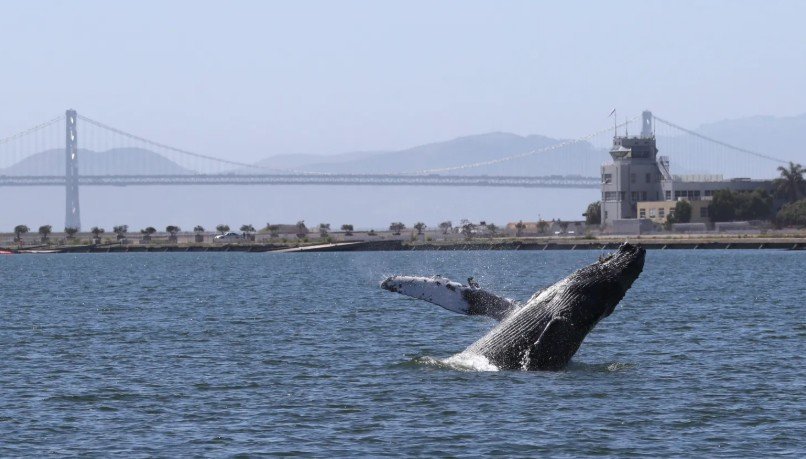
Save Willy Act Introduced in California to Protect Whales and Enhance Maritime Safety in San Francisco Bay
California has taken a significant step toward strengthening marine conservation efforts and improving maritime safety in the San Francisco Bay Area with the introduction of the “Save Willy Act.” The proposed legislation, led by Representative Sam Liccardo (D-CA) along with co-sponsors, aims to reduce deadly vessel–whale collisions and protect vulnerable marine life navigating one of the busiest coastal waterways in the United States.
The bill’s name draws inspiration from the 1993 film Free Willy, reflecting its core mission of safeguarding whales that enter the Bay. The urgency behind the proposal is underscored by alarming statistics: around 18% of grey whales that enter San Francisco Bay do not survive, highlighting a growing concern for endangered marine species protection in the region.
According to marine experts, at least eight whale deaths have already been recorded in the San Francisco Bay Area this year alone. Kathi George, Director of Cetacean Conservation Biology at The Marine Mammal Center, emphasized the importance of the initiative, stating that increased attention to whale protection is critical for coastal ecosystems and ocean biodiversity preservation.
If enacted, the Save Willy Act would establish a dedicated “Whale Desk” at the U.S. Coast Guard station in San Francisco. This monitoring hub would allow mariners and the public to report whale sightings in real time, helping reduce the risk of ship strikes and vessel collisions with whales. The system is also designed to alert vessel operators when whales are present in navigation routes, improving overall maritime navigation safety and risk management.
In addition, the legislation directs the Coast Guard to evaluate and implement advanced whale-tracking and alert technologies. Representative Liccardo highlighted the potential of combining scientific monitoring with crowd-sourced data from commercial shipping and recreational boating communities to create a centralized warning system. This approach, he noted, could significantly reduce preventable whale fatalities while also preventing costly maritime accidents.
Recent data underscores the urgency of the issue. In 2025 alone, 24 whale deaths were documented in the San Francisco Bay Area, the highest number recorded in the past 25 years. Of these, 21 were grey whales (Eschrichtius robustus), massive marine mammals that can weigh up to 90,000 pounds and are increasingly threatened by climate change, shifting ocean conditions, and human maritime activity.
A recent study published in Frontiers in Marine Science further revealed that approximately 18% of grey whales entering San Francisco Bay do not survive, reinforcing concerns about changing migration patterns and ecosystem stress. Scientists have linked these shifts partly to environmental changes in Arctic feeding grounds, where climate change is altering whale behavior and pushing them into unfamiliar and riskier waters.
The introduction of the Save Willy Act follows ongoing concerns raised by Representative Liccardo regarding whale mortality trends in 2025. In correspondence with the National Oceanic and Atmospheric Administration (NOAA), he questioned whether funding and staffing limitations may be affecting the agency’s ability to protect marine ecosystems. NOAA reportedly attributed the increase in whale activity within the Bay to broader ecological changes, including climate-driven disruptions in Arctic food sources.
Strategically introduced on Earth Day (April 22), the Save Willy Act has already gained strong support from leading marine and environmental organizations, including The Marine Mammal Center, Monterey Bay Aquarium, and the California Academy of Sciences.
As global attention increasingly turns toward sustainable shipping practices, marine wildlife protection, and climate-resilient ocean management, this legislation positions California at the forefront of innovative whale conservation policy and maritime environmental safety initiatives.
Related:
- North Sea Cetacean Protection Crisis 2026: Whales and Dolphins at Risk from Shipping Noise, Fishing Activities, and Weak Marine Policies
- Stranded Whale Rescue Germany: “Timmy” Humpback Whale Escapes Baltic Sandbank, Gets Trapped Again in Dramatic Maritime Rescue Effort
- Stranded Humpback Whale Crisis in Baltic Sea Raises Marine Conservation Concerns in Germany