Oil Tanker Hit in Strait of Hormuz as Iran-US Conflict Escalates, Raising Fresh Maritime Security Concerns
A commercial oil tanker was struck by a projectile while transiting the Strait of Hormuz on Saturday, marking another serious incident in one of the world’s busiest maritime trade corridors. The attack comes as tensions between Iran and the United States sharply intensified, with both nations exchanging military strikes in the most significant escalation since signing an interim peace agreement two weeks ago.
According to the United Kingdom Maritime Trade Operations (UKMTO), the tanker sustained damage to its bridge after being hit, although all crew members were reported safe. The Joint Maritime Information Center (JMIC), which coordinates maritime security among coalition naval forces operating in the region, responded by raising the regional shipping threat level following the latest incidents.
The latest tanker strike follows Thursday’s attack on a cargo vessel, adding to growing concerns over the safety of commercial shipping in the Gulf. The renewed violence has increased risks for shipowners, charterers, insurers, and energy companies that depend on uninterrupted traffic through the strategic waterway.
Iran and US Exchange Strikes Despite Peace Agreement
Washington and Tehran each accused the other of violating the interim agreement designed to end four months of conflict. U.S. officials stated that American forces carried out overnight strikes on Iranian targets, while Iranian authorities said they launched attacks on locations associated with U.S. forces in response.
Iran has not directly acknowledged responsibility for individual attacks on merchant vessels. However, Iranian state television reported that the Islamic Revolutionary Guard Corps (IRGC) fired what it described as “warning shots” toward vessels attempting to transit shipping channels not approved by Tehran. The report claimed that several ships are now seeking Iranian authorization before crossing the Strait of Hormuz.
Read: Singapore-Flagged Container Ship Damaged by Unknown Projectile in Strait of Hormuz
Earlier on Saturday, Iran’s Foreign Ministry described its military actions against U.S.-linked targets as defensive. Bahrain, home to the U.S. Navy’s regional headquarters, also reported an Iranian drone attack, although the U.S. military had not immediately commented on those reports.
Strait of Hormuz Remains at the Center of Global Energy Trade
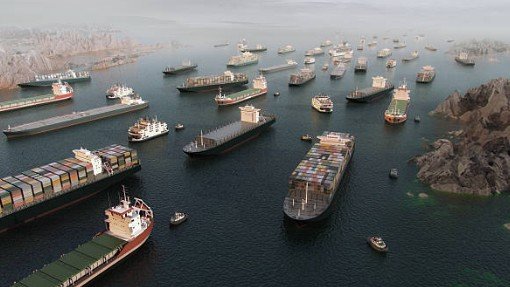
The Strait of Hormuz remains one of the world’s most strategically important maritime chokepoints, carrying a substantial share of global crude oil and liquefied natural gas exports. Months of conflict had disrupted vessel movements, leaving hundreds of ships waiting inside the Gulf before traffic gradually resumed over the past two weeks.
The renewed security incidents have once again highlighted the vulnerability of international energy supply chains and commercial shipping operations in the region. Maritime analysts continue to warn that any sustained disruption could affect freight markets, marine insurance premiums, and global energy logistics.
Iran has increasingly sought to assert greater control over vessel movements through the strait. While the United States has encouraged merchant vessels to use a southern navigation corridor along the coast of Oman, Tehran has promoted a northern route through Iranian waters, where it ultimately hopes to regulate and charge transit fees.
Ebrahim Azizi, chairman of Iran’s parliamentary national security committee, warned that any vessel failing to comply with Iranian shipping instructions would face decisive action.
Regional Tensions Extend Beyond Gulf Waters
Iran argues that Washington failed to uphold key elements of the interim agreement, particularly regarding ceasefire commitments linked to the conflict between Israel and Hezbollah in Lebanon.
Although the United States brokered another ceasefire between Israel and Lebanon on Friday, fighting has continued. Lebanese state television reported an Israeli drone strike in the Nabatiyeh area on Saturday, while the Israeli military said it targeted an individual posing a threat to its forces.
Hezbollah leader Naim Qassem rejected the latest ceasefire arrangement, calling it “null and void.”
Meanwhile, Mohsen Rezaei, adviser to Iran’s Supreme Leader, accused the United States of violating the memorandum of understanding by supporting proxy forces across the region and contributing to instability around the Strait of Hormuz.
Iranian state television also reported that Revolutionary Guard forces had carried out what it described as a “decisive response” after U.S. forces struck a communications tower in the southern Iranian port city of Sirik. Iran’s Mehr News Agency said port operations continued normally without damage to port infrastructure or equipment.
Shipping Industry Faces Renewed Uncertainty
The latest attacks come at a critical time for the global shipping industry. Oil prices had recently fallen close to pre-conflict levels as vessel traffic gradually resumed through the Gulf, boosting energy supplies to international markets.
Industry experts note that restoring confidence among shipping companies will require sustained two-way commercial traffic through the Strait of Hormuz under stable security conditions. Continued attacks or heightened military activity could prompt shipowners to alter routes, increase security measures, or face higher insurance costs.
US Warns Iran Against Further Escalation
U.S. Vice President JD Vance, the chief American negotiator during the conflict, said Washington had honored the ceasefire agreement and placed responsibility for the renewed violence on Tehran.
“Iran signed a ceasefire agreement. We have honored it. If they have disagreements about how the memorandum is being applied, they can pick up the phone. But violence will be met with violence,” Vance wrote on X.
The latest escalation unfolded over the weekend while global financial and energy markets remained closed, giving both sides time to exchange military actions without triggering an immediate market reaction. Similar weekend confrontations during recent weeks have often been followed by diplomatic efforts before trading resumed.
Prior to Saturday’s developments, benchmark oil prices had already fallen approximately three percent on Friday, heading toward their sharpest weekly decline since hostilities eased.