Chinese Supertankers Carrying Saudi Crude Oil Continue through Bab el-Mandeb amid Red Sea Security Risks
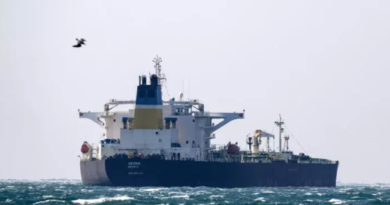
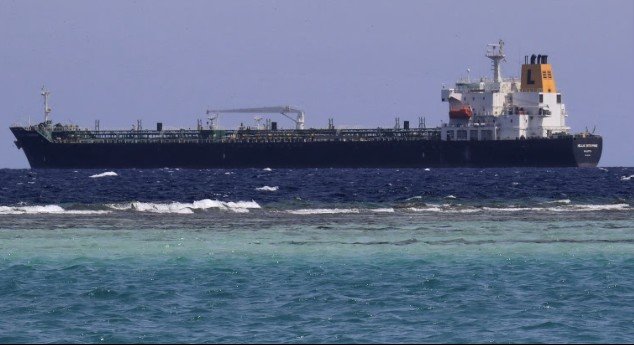
Two Chinese supertankers transporting a combined 4 million barrels of Saudi crude oil continued their southbound transit through the Bab el-Mandeb Strait on Thursday, despite growing Red Sea shipping security concerns following reported attacks on Saudi-linked vessels. The movement is being closely monitored by the global shipping industry, as it could indicate whether commercial oil tanker traffic can continue safely through one of the world’s most strategically important maritime chokepoints.
The passage of the vessels comes as the Iran-aligned Houthis recently announced a naval blockade targeting Saudi Arabia, raising fresh concerns over global energy supply, maritime security, Saudi oil exports, and the stability of international crude oil transportation routes. The latest developments also coincide with reduced traffic through the Strait of Hormuz, further increasing uncertainty in global energy markets.
Shipping data from LSEG showed that the Singapore-flagged Very Large Crude Carrier (VLCC) Xin Long Yang, which had temporarily halted and made a U-turn in the central Red Sea earlier this week, resumed its southbound voyage late Wednesday. The vessel was observed sailing along the Yemeni coast and remains bound for Qinzhou in southern China.
Following closely behind is the Chinese-flagged VLCC Cosnew Lake, which is scheduled to discharge its cargo at Huizhou in Guangdong Province. Automatic Identification System (AIS) transmissions indicated that both tankers have Chinese crews onboard.
The two vessels are chartered by Unipec, the trading arm of Sinopec, Asia’s largest oil refiner, after loading Saudi crude earlier this week at the Saudi port of Yanbu. Cosco Shipping, which manages both vessels, and Sinopec had not issued immediate comments regarding the voyage.
LSEG shipping data also showed that at least two additional VLCCs chartered by Unipec and scheduled to load Saudi crude from Yanbu later this month slowed their approach toward the Bab el-Mandeb Strait. Instead of continuing their transit, the vessels were observed making circular movements in the Gulf of Aden, suggesting operators are reassessing security conditions before entering the Red Sea.
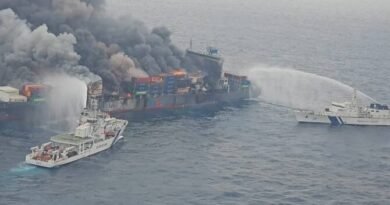
Earlier on Thursday, the Houthis announced they had conducted a military operation targeting two Saudi oil tankers that they claimed violated the recently declared blockade. Saudi Arabia’s official news agency SPA later reported that the Saudi vessel Encelia was attacked in the Red Sea and caught fire, although all crew members were reported safe.
The deteriorating security environment has already affected commercial shipping activity across the region. According to LSEG, only 27 vessels,including five oil tankers and one liquefied petroleum gas (LPG) carrier, transited the Bab el-Mandeb Strait on Wednesday, down from 38 vessels the previous day. Separate data from Vortexa showed that one VLCC exited the Bab el-Mandeb with its AIS transponder switched off.
Traffic through the Strait of Hormuz also remained subdued. LSEG data indicated that two VLCCs exited the strategic waterway on Thursday. The New Giant, carrying approximately 2 million barrels of Iraqi crude, is heading toward the Chinese port of Rizhao, while the Rotterdam Energy, loaded with 2 million barrels of Upper Zakum crude from the United Arab Emirates, was observed near Fujairah, according to LSEG and Kpler.
Kpler data showed only three commodity vessels transited the Strait of Hormuz on Wednesday, compared with four the previous day and 18 during the same period a week earlier. Two vessels entered the strait from the Gulf of Oman, including a tanker transporting dirty petroleum products that sailed through Iranian waters and a dry bulk carrier operating in dark mode with its tracking signal switched off.
As of July 20, LSEG data recorded 253 laden tankers operating in the Gulf, including 102 oil tankers, 64 liquefied natural gas (LNG) carriers, and 66 liquefied petroleum gas (LPG) carriers, highlighting the continued strategic importance of Gulf shipping lanes despite heightened regional tensions.
The continued movement of Chinese supertankers through the Bab el-Mandeb and the slowdown in vessel traffic across both the Red Sea and the Strait of Hormuz underscore the growing risks facing global maritime trade and energy supply chains as geopolitical tensions persist across the Middle East.