Italy Turns Invasive Blue Crab Crisis into Seafood Export Opportunity as Fishermen Seek Sustainable Fisheries Solution
Italy’s invasive species crisis in the Adriatic Sea is forcing fishermen to rethink their livelihoods as the rapidly expanding Atlantic blue crab threatens the country’s valuable clam and mussel industries. After years of losses, fishermen in the Po River Delta are increasingly turning to seafood exports and new markets to transform the blue crab from an ecological threat into a commercial opportunity.
The shift highlights a growing challenge for sustainable fisheries, marine ecosystem management and the seafood industry as climate change alters coastal environments. While Italian authorities previously paid fishermen to capture and incinerate the invasive crustaceans, the fishing industry is now exploring commercial solutions that could protect shellfish farming while generating income.
From Fishing Disaster to Commercial Opportunity
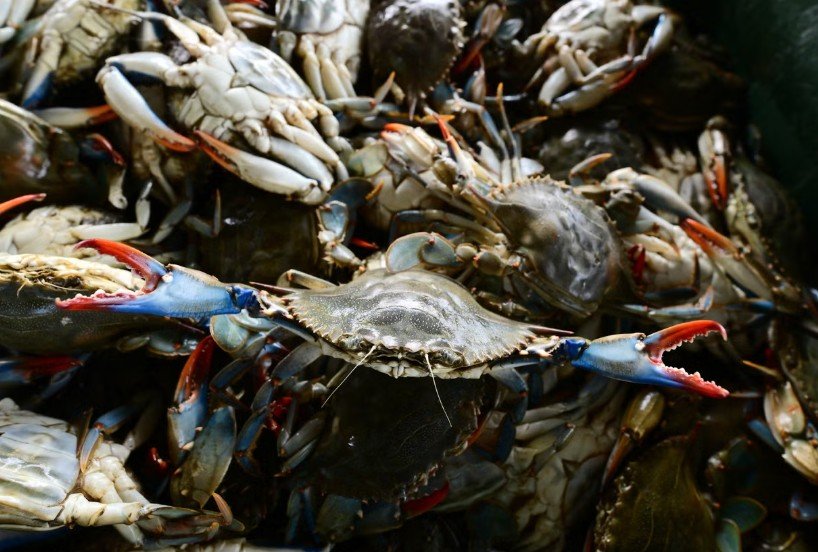
For two years, Italian fishermen incinerated much of the invasive Atlantic blue crab caught in the Po River Delta south of Venice. Few consumers in Italy had an appetite for the alien predator, which has been blamed for devastating populations of prized Manila clams.
But as containment efforts continue, the fishing industry is changing course. Instead of destroying the crabs, fishermen are finding international buyers and developing new seafood markets.
For second-generation fisherman Federico Zago, the change has been crucial. Like many members of his local cooperative, Zago watched his income collapse after the blue crab invasion.
The Polesine Fishermen’s Cooperative Consortium saw its revenues fall 75% to 15 million euros ($17 million) in 2024 and 2025, while the number of active cooperative members declined from 1,500 to 850.
“We needed to change strategy, and create an opportunity from this disaster,” said Paolo Mancin, president of the cooperative.
The consortium subsequently turned toward exporting the unwanted crabs, hoping to protect Manila clams and mussels that had generated decades of prosperity in the shallow lagoons of Veneto and Emilia Romagna.
Blue Crab Sales Replace Incineration
Today, Zago pulls cages filled with blue crabs from his traditional fishing cabin built on stilts above the Scardovari lagoon in Italy’s Veneto region.
The new strategy is already showing results. So far this year, the consortium has sold every crab it has caught, eliminating the need for incineration. It forecasts 20 million euros ($23 million) in revenue this year, with crab sales expected to account for most of that income.

“Since we’re going to have to live with these crabs, I hope they become an opportunity,” Zago said. “I hope the market continues to grow.”
What is Driving Italy’s Invasive Blue Crab Population Boom?
The Atlantic blue crab has been present in the Adriatic Sea since at least the 1940s. According to Piero Genovesi, an invasive species expert at Italy’s environmental protection institute, the crab originally arrived through ballast water from commercial vessels.
For decades, its numbers remained relatively limited, and fishermen generally encountered the species only occasionally.
That changed dramatically in 2023.
The crabs began damaging fishing nets, consuming mollusks at an alarming rate and competing with the native green crab, which is itself an important local seafood product.
Climate change has contributed to the changing conditions. Warmer water can support blue crab reproduction, while drought-driven reductions in Po River levels are believed to have been a major trigger for the recent population explosion.
Lower river levels allowed seawater to move farther into freshwater tributaries across the peninsula, particularly around lagoons and deltas where clam and mussel farms offered abundant food.
“Climate change may therefore have favored reproduction through both temperature and salinity, because it changed the salinity of the water,” Genovesi said.
Italy’s Blue Crab Eradication Effort Struggles
The damage to Italy’s mollusk industry prompted the government to introduce a blue crab eradication program in 2024.
Over two years, the government paid the Polesine to capture and incinerate nearly 2.3 million kilograms (5 million pounds) of crabs. Fishermen in the neighboring Sacca di Goro lagoon and the Orbetello lagoon in Tuscany also participated in similar efforts.
However, the scale of reproduction made controlling the population extremely difficult.
Female blue crabs can produce up to 8 million eggs each season, meaning that large-scale culling barely reduced overall numbers. Enrico Caterino, the government’s extraordinary commissioner for the blue crab emergency, said the project has now been shelved.
The experience illustrates the difficulty of controlling invasive marine species once they become firmly established in coastal ecosystems.
Can Octopuses Help Control Blue Crab Numbers?
Scientists are also testing biological approaches to the problem.
This summer, University of Bologna researchers released 150,000 baby octopuses into the Adriatic Sea along the Riviera Romagnola, approximately two hours south of the Po Delta.
The project was promoted with video footage showing an adult octopus capturing and eating a crab.
However, the approach remains uncertain. Most of the young octopuses are not expected to survive, while octopuses generally prefer rocky habitats rather than the sandy lagoons where blue crabs are thriving.
Experts and fishermen are therefore skeptical that natural predation alone can control the crab population.
“If an animal with such high reproductive potential finds suitable environmental conditions, predators may not be able to keep it under control,” Genovesi said.
Seafood Exports Give Fishermen a New Market
Every morning, Italian fishermen unload crates of live blue crabs from cars and trucks, typically handling 100–150 kilograms at a time.
Although crab sales are helping keep fishing businesses alive, earnings remain far below the levels generated by the traditional clam industry.
Blue crab currently sells for just 1.30 euros per kilogram, compared with approximately 10 euros for clams.
Clams previously generated around 90% of fishermen’s income. Today, they account for only about 10%.
The emerging seafood export market is therefore becoming an important alternative for communities affected by the invasive species.
The crabs are steamed, frozen and packed before being shipped to Sri Lanka, where workers manually remove the meat.
A joint venture between Sri Lankan company Taprobane Seafoods and the Scardovari consortium produces several crab products, including claw meat, mixed meat and fillets.
Most of the products are exported to other markets, while only a small quantity is returned to Italy. Taprobane is also forecasting expansion into large-scale retail markets in Italy and across Europe.
Mancin hopes the availability of professionally processed crab meat will eventually persuade Italian consumers to reconsider the species.
The industry launched an “If you can’t beat ’em, eat ’em” campaign in 2023, but consumer acceptance has remained limited.
Why Italian Restaurants are Still Hesitant
Despite the growing seafood trade, blue crab remains largely absent from leading restaurants around Venice that traditionally specialize in native green crab.
The FIPE Venice restaurant federation attributes the limited adoption partly to the labor required to process the invasive species and partly to its negative reputation among consumers.
One notable exception is the Yogi restaurant and bar in Porto Tolle in the Po Delta.
The restaurant has embraced blue crab out of both necessity and enthusiasm after the invasion left local fishermen struggling to supply traditional products.
Owner and chef Stefania Marchesini spent 11 years fishing professionally herself. She now pays local fishermen a premium for their catches, particularly soft-shell crabs known locally as moeche.
Her family-run restaurant offers an all-crab menu that includes fried crab balls, creamed crab with polenta, soft-shell crab and crab served in the shell.
“At first, the customer is very skeptical. But then the reaction is completely positive, and they want to try the entire range of products,” she said.
Marchesini also operates a separate workshop where she prepares crab products for other restaurants.
So far, however, the commercial business has been disappointing. Her products include individually packaged moeche and whole crabs that have already been broken apart and vacuum-packed to make preparation easier and less messy.
Even when restaurants sell out of the products, some remain reluctant to reorder.
From Invasive Species to Sustainable Seafood Opportunity
Marchesini believes cultural resistance remains one of the biggest obstacles to expanding the blue crab market.
But she is continuing to promote the species as a viable seafood product. She recently took her menu to Alimentaria in Barcelona, one of the world’s largest food and beverage trade fairs.
“We are all angry because it invaded our seas,” Marchesini said. “But we also have to eat. Once people understand how it should be prepared, they will realize it is an excellent product.”
The Italian experience demonstrates the complicated relationship between invasive species management, climate change, sustainable fisheries and seafood markets. For fishermen in the Po Delta, the blue crab remains an environmental threat, but developing international demand could provide a practical economic response to a problem that eradication efforts have so far struggled to solve.