Yemen Houthis Seize Red Sea Island, Raising New Shipping and Maritime Security Risks
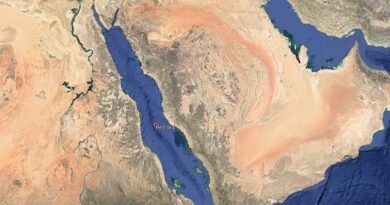
Iranian-backed Houthi rebels in Yemen have seized the strategic Red Sea island of Mayun after capturing the nearby port city of Mokha, raising fresh concerns over international shipping, maritime security and commercial shipping routes through one of the world’s most important maritime corridors.
The latest developments threaten to further disrupt global shipping and maritime trade in the Red Sea, particularly around the Bab el-Mandeb Strait, through which about 12% of the world’s goods are typically transported. The strategic waterway has become increasingly important for shipping companies and energy exports as vessels face growing risks elsewhere in the region.
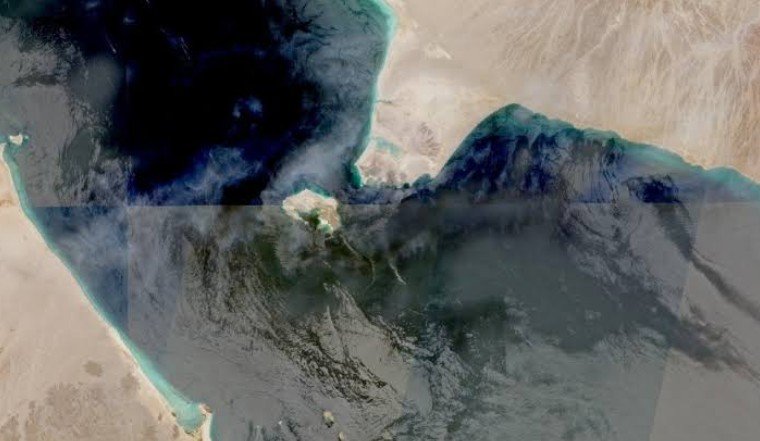
The seizure of Mayun, an island located at the entrance to the Red Sea, was confirmed by a senior military official from Yemen’s internationally recognized government and a Houthi official. Both officials spoke on condition of anonymity because they were not authorized to speak to journalists.
The Houthis captured the Red Sea port city of Mokha on Thursday before taking control of Mayun on Friday. The island occupies a strategically important position near the Bab el-Mandeb Strait, a critical maritime passage linking the Red Sea with the Gulf of Aden and the wider global shipping network.
The development is particularly significant for Saudi Arabia, a key U.S. ally and a major regional energy exporter. Mayun has emerged as an important alternative route for the movement of Saudi oil and other exports as Iran has targeted vessels in the Strait of Hormuz.
Saudi Arabia responded to the Houthi advances with airstrikes against the airport in Mokha, according to a Houthi broadcaster. There was no immediate report of damage or casualties from the strikes.
The Houthis sought to reassure some parts of the maritime industry, with their military spokesperson, Yahya Saree, saying Friday that “maritime navigation is safe for all companies except for Saudi vessels.” However, shipping markets remain nervous, while experts have described the Houthis as highly unpredictable.
The uncertainty could place additional pressure on commercial shipping, maritime logistics and vessel operators navigating the Red Sea and surrounding waters. The Bab el-Mandeb Strait is particularly important to international trade because disruption in the area can affect the movement of goods between major global markets.

Iran, meanwhile, called for an end to Saudi Arabia’s blockade of Yemen and an immediate return to negotiations with the Houthis. The statement from Iran’s Foreign Ministry demonstrated continued political support for its regional ally.
Anthropic Blocks Yemen-Based Users Over Weapons Development
Separately, artificial intelligence company Anthropic said it identified and blocked users in northern Yemen who were attempting to use its AI models in weapons development programs.
According to Anthropic, the users were pursuing sophisticated precision weapons, including long-range ballistic and hypersonic missiles. Some of the activities reportedly involved commercially available smartphones.
The company said it identified the accounts during an internal investigation and subsequently banned them. The accounts were reportedly using Claude Code to develop software that “steers and stabilizes a flying vehicle.”
Anthropic also said the users were working on weapons including a guided rocket capable of allowing mobile phone users to autonomously track targets.
However, the company said there was no evidence that the users in Yemen had successfully deployed or fielded a weapon.
The Iran-backed Houthi rebels, who control northern Yemen, have been accused of smuggling advanced weapons for years despite a blockade and a United Nations arms embargo. Iran denies providing weapons to the rebels.
Iran Plans Regional Talks Over Strait of Hormuz
Iranian Foreign Ministry spokesperson Esmail Baghaei said Friday that a regional meeting involving Iran and other Persian Gulf countries, including Oman and Iraq, is planned for Monday in Oman.
Baghaei said the meeting will include discussions on previous talks between Iran and Oman concerning shipping through the Strait of Hormuz.
Iran and Oman, located on opposite sides of the strategically vital waterway, have held discussions over the management of ship traffic through the strait, which has been heavily disrupted by the Iran war.
Before the United States and Israel attacked Iran on Feb. 28, about one-fifth of the world’s traded oil passed through the Strait of Hormuz. Since then, Iran has retaliated by repeatedly attacking neighboring Gulf countries that host U.S. military forces.
Tensions Continue Across Lebanon and Gaza
Elsewhere in the Middle East, Israeli Defense Minister Israel Katz said Friday that Israel’s military had completed the destruction of tunnels in the strategic Ali Taher ridge in southern Lebanon. Katz said the tunnels were built by Hezbollah with Iranian funding.
The ridge has been the scene of clashes between Israeli forces and Hezbollah in recent weeks. Residents nearby reported hearing loud explosions and feeling the ground shake on Thursday. Hezbollah did not immediately comment.
Israeli forces also continued demolishing houses in villages under their control in southern Lebanon. Residents displaced from the coastal village of Mansouri watched from a distance Friday as Israeli drones carried boxes of explosives to be dropped on their homes. The Israeli army did not immediately respond to a request for comment.
In Gaza, an Israeli strike on Friday killed a man walking on a street in southern Gaza and wounded several people, including children, according to Nasser Hospital, which received the body and wounded. The Israeli military said the strike in Khan Younis targeted a Hamas member.
Meanwhile, mourners held funeral prayers for two of three men killed Thursday in Khan Younis. The Israeli military said one of those killed, Mohammad Yazouri, was a Hamas commander.
The developments across Yemen, the Red Sea, the Strait of Hormuz, Lebanon and Gaza highlight the continuing security pressures facing the Middle East and the potential risks to maritime trade, shipping routes, energy transportation and regional maritime security.