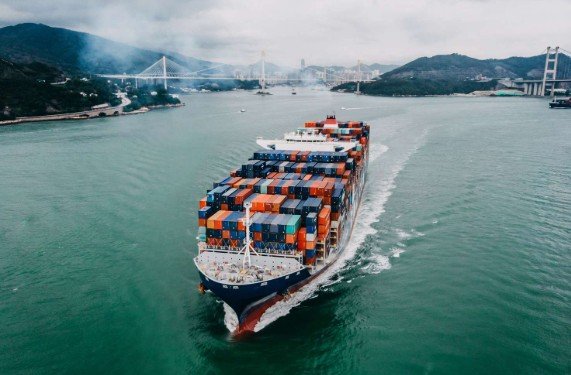
CIMC 2026 Targets Major Transformation of Sri Lanka’s Maritime Logistics and Shipping Industry
Sri Lanka is targeting a major transformation of its maritime logistics, shipping industry, and port economy, with the Colombo International Maritime Conference (CIMC) 2026 calling for a fundamental shift in the country’s current operational model. The goal is to improve efficiency and increase the contribution of ports and logistics to 10 percent of gross domestic product (GDP), up from the current 2.5 percent.
The eighth edition of CIMC, held under the theme “Building a world around us,” brought together more than 500 regional policymakers, terminal operators, global shipping lines, and development agencies to examine how Sri Lanka can strengthen its position as a major logistics hub and fully integrated maritime trade center. The three-day conference focused on port expansion, digitalization, bonded logistics, marine services, regulatory reform, and the changing requirements of global supply chains.
Situated along the main East-West East Asia–Europe shipping lane, just 6 to 10 nautical miles off the southern tip of South Asia, Sri Lanka occupies a strategically important position in international shipping. The Port of Colombo has developed into the premier maritime transshipment engine of the Indian Ocean, handling millions of twenty-foot equivalent units (TEUs) annually and climbing the global rankings to enter the top 20 container ports worldwide.
Colombo serves as an important feeder hub for the Indian subcontinent, processing nearly 80 percent of its total container volumes as transshipment cargo bound for India, Pakistan, Bangladesh, and the Maldives.
The port is now moving beyond its traditional role of vessel-to-vessel container transfers. Its deep-water berths can handle ultra-large container vessels (ULCVs) exceeding 20,000 TEUs, while major terminal expansion projects, including the East Container Terminal (ECT) and West Container Terminal (WCT-1), are strengthening its capacity to serve international shipping.
As global supply chains increasingly prioritize resilience, speed, and decarbonization, Colombo is seeking to develop into a broader logistics center offering multi-country consolidation, bonded warehousing, and advanced marine services directly supporting global international trade.
U.S. Federal Maritime Commission (FMC) Chairman Laura DiBella, who was chief guest at the opening ceremony, highlighted the scale of Colombo’s potential.
“The amount of growth and potential that is here in Colombo in Sri Lanka, as a port by comparison around the world, is immense, absolutely immense,” DiBella said.
She also praised Sri Lanka’s ability to continue succeeding despite significant challenges, saying its performance “in the face of incredible conflict” was a testament to where the country could go.
DiBella emphasized the importance of competition in the maritime sector, saying the Federal Maritime Commission wants to see more competition. She said the commission monitors competitive practices, including possible cartel activity, exploitation, and surcharges that can have significant effects on cargo and ultimately consumers.
The focus on stronger maritime infrastructure comes as global trade routes face ongoing Middle Eastern disruptions, rising freight overheads, and increased vulnerabilities around critical maritime chokepoints. These developments have further highlighted the strategic importance of the Indian Ocean for international shipping and supply chains.
Sri Lanka Seeks to Move Beyond Traditional Transshipment
A central theme of CIMC 2026 was the need to change Sri Lanka’s operational model. Industry experts and speakers emphasized that conventional transshipment, based simply on moving containers from one vessel to another, is no longer enough to sustain long-term economic growth or retain market share.
Instead, discussions focused on developing comprehensive free port zones and bonded logistics centers that would allow international logistics providers to establish regional distribution hubs directly adjacent to quay walls.
Panelists highlighted opportunities in multi-country consolidation, transit value addition, inventory processing, and bonded re-export operations. These capabilities could allow Sri Lanka to capture higher margins per container while embedding its ports more deeply into global supply chains.
Procurement Capacity Emerges as Key Issue
Procurement capacity was also identified as an important obstacle to infrastructure development.
Amali Rajapaksa, World Bank Senior Infrastructure Specialist, South Asia, told the forum on the second day that improving procurement capacity could enable faster implementation of government projects.
“One key thing if the government wants to fix, I think we can very quickly move ahead with implementation, is procurement capacity,” Rajapaksa said.
She added that planning and other preparatory work would not be enough if procurement capacity was not addressed, saying this was “really standing in the way right now.”
“For infrastructure organizations, 90% is procurement,” Rajapaksa said, adding that significant progress could be achieved by fixing the procurement process.
Port Expansion Remains Central to Strategy
Infrastructure modernization and increased port capacity were highlighted as essential to Sri Lanka’s planned shift toward an integrated logistics and shipping hub.
The conference examined Sri Lanka’s port expansion plans, which target a nearly 100 percent increase in new container capacity by the end of 2027 and aim to double total capacity across the Colombo and Hambantota port complexes by 2040.
Delegations reviewed the operational rollout of deep-water facilities, including the East Container Terminal and West Container Terminal. Discussions also addressed quayside bottlenecks, yard crane scheduling, and the need to ensure terminal depths can accommodate ultra-large container vessels exceeding 24,000 TEUs without costly off-dock waiting times.
Digital Technology to Reshape Port Operations
CIMC 2026 also placed strong emphasis on digital transformation and administrative reform alongside physical infrastructure development.
Logistics analysts highlighted the growing importance of electronic documentation and automated workflows in modern international trade. Conference sessions focused on accelerating a single-window digital Port Community System, integrating electronic bills of lading, and using artificial intelligence to optimize berth allocation and predictive traffic management.
International development partners, including representatives from the World Bank and Asian Development Bank, outlined policy reforms aimed at modernizing customs procedures and strengthening cybersecurity frameworks for critical digital infrastructure.
Marine Services and Green Bunkering
The conference also examined the need to strengthen ancillary marine services so Sri Lanka can offer a more complete service package to vessels operating along the East-West trade corridor.
Discussions included expanding regional ship bunkering infrastructure, particularly the transition toward low-sulfur fuels and green bunkering options such as liquefied natural gas and methanol. These alternatives can support global fleets as they work toward decarbonization targets.
Marine engineering, ship repair, and dry-docking capabilities in Colombo and Trincomalee were also identified as high-value opportunities for capturing routine vessel maintenance business.
Sri Lanka Positions Itself as South Asia Gateway
CIMC 2026 underscored Sri Lanka’s geographic position as a potential gateway to South Asia’s growing trade volumes, particularly as neighboring India accelerates toward becoming the world’s third-largest economy by 2030.
The summit concluded with a multi-party panel that challenged Sri Lanka’s legislative leadership to maintain regulatory stability, update the national maritime legal framework, and establish a predictable environment for foreign direct investment.
The conference ultimately presented a strategy built around expanding port capacity, improving procurement, strengthening digital infrastructure, developing free port and bonded logistics services, and expanding marine support capabilities.
By aligning port expansion, digital innovation, maritime services, and regulatory reform, Sri Lanka aims to strengthen its position as a premier maritime and logistics hub in the Indian Ocean, while capturing a larger share of value from the international shipping and global trade moving through the region.
Recommended Stories
- Silk Road Maritime Shipping Routes Reach 153 Ports, Strengthening China-Europe Trade and Global Supply Chains
- Panama Lifts Port Concession Restrictions as New Port Tenders Loom
- Junaid Anwar Chaudhry Proposes Maritime Business Facilitation Centre for Exporters and Importers
- Tug Service Strike to Disrupt Rotterdam, Amsterdam and Zeeland Ports, Threatening Vessel Operations