Maritime Trade & Economy

Maritime Trade & Economy focuses on global shipping, seaborne commerce, and the economic dynamics shaping international trade. This category covers developments in maritime logistics, shipping markets, freight trends, port competitiveness, blue economy initiatives, and the economic impact of maritime policies and technologies. It provides insights into how oceans, ports, and shipping networks drive global trade, regional growth, and sustainable economic development.

Maritime Trade & Economy

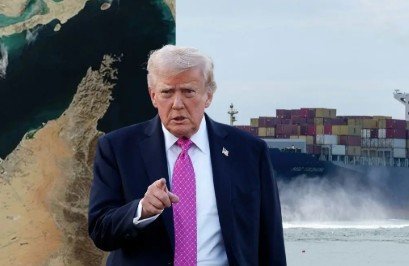
Global Oil Shipping Crisis: Trump Says Allied Warships May Secure Strait of Hormuz as Iran Tightens Control

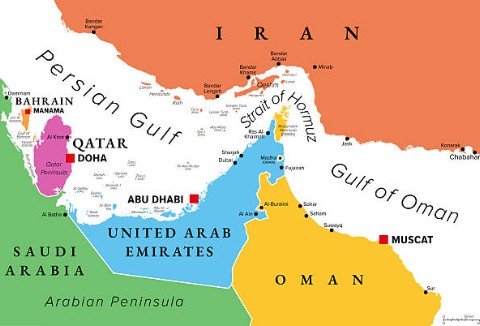
Tensions in global energy markets are escalating after Donald Trump said that several nations could deploy naval forces to help keep the critical shipping corridor of the Strait of Hormuz open amid an ongoing standoff with Iran. The narrow maritime chokepoint, responsible for transporting roughly one-fifth of the world’s oil and liquefied natural gas supplies, has been effectively disrupted for more than two weeks during the continuing conflict involving the United States, Israel and Iran.

Read More
Maritime Trade & Economy

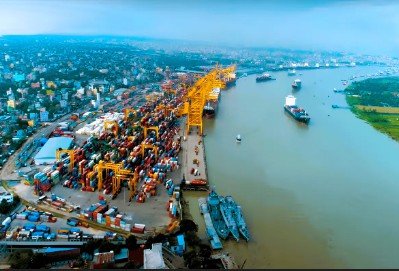
Karachi Port Emerges as Strategic Transshipment Hub as Middle East Shipping Crisis Reshapes Global Trade Routes

Rising geopolitical tensions in the Middle East are beginning to reshape regional shipping routes, driving a noticeable surge in transshipment activity at Karachi Port as global shipping lines redirect cargo flows to avoid potential disruptions across Gulf waters. Port authorities confirmed that the port recently handled two vessels carrying transshipment cargo simultaneously, signaling Karachi’s growing importance as a regional logistics hub for container redistribution across Middle Eastern maritime routes.

Read More
Maritime Trade & Economy

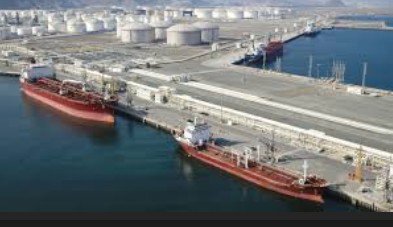
Saudi Arabia Activates Desert Oil Pipeline as Strait of Hormuz Shipping Crisis Disrupts Global Energy Supply

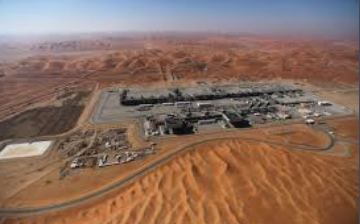
Saudi Arabia is moving quickly to activate a decades-old contingency plan to keep crude exports flowing as a severe shipping disruption linked to the crisis around the Strait of Hormuz threatens global energy markets. The kingdom is pumping millions of gallons of oil across vast desert areas to reach tankers on the Red Sea as traditional shipping routes face paralysis.

Read More
Maritime Trade & Economy

IEA Proposes Historic Strategic Petroleum Reserve Release as Global Oil Supply Faces Hormuz Disruption

The International Energy Agency is considering what could become the largest coordinated release of strategic oil reserves in history as global energy markets face severe disruption from the ongoing crisis in the Strait of Hormuz, one of the world’s most critical oil shipping routes. According to reports, member states of the global energy organization are expected to vote on a proposal that would release a massive volume of crude oil from emergency reserves in an effort to stabilize global oil prices and protect international energy supply chains.

Read More
Maritime Trade & Economy

Strait of Hormuz Shipping Disruptions Trigger Energy Market Volatility and Global Trade Concerns

Disruptions to maritime traffic in the Strait of Hormuz, one of the world’s most critical shipping corridors, are raising major concerns for global energy markets, fertilizer supply chains, and vulnerable economies. According to a rapid assessment released by the United Nations Trade and Development (UNCTAD), escalating military tensions in the region have significantly disrupted shipping flows through the strategic waterway.
The Strait of Hormuz handles approximately one quarter of global seaborne oil trade, making it a key artery for international energy supplies. Large volumes of liquefied natural gas (LNG), liquefied petroleum gas (LPG), refined petroleum products, and fertilizers also transit through the narrow maritime passage connecting the Persian Gulf to global markets.

Read More
Maritime Trade & Economy

Oil Prices Drop 7% as Trump Signals Possible End to Middle East Conflict

Oil prices fell sharply by 7% on Tuesday, retreating from a more than three-year high after U.S. President Donald Trump suggested that the Middle East war could end soon, easing fears of prolonged disruptions to global oil supplies.
Brent crude dropped $6.79, or 6.9%, to $92.17 per barrel, while U.S. West Texas Intermediate (WTI) slid $6.55, or 6.9%, to $88.22 per barrel. Both benchmarks briefly fell as much as 11% before moderating losses. Oil had surged past $100 per barrel on Monday, its highest since mid-2022, fueled by supply cuts from Saudi Arabia and concerns over U.S.-Israeli military actions against Iran.

Read More
Maritime Trade & Economy

China Strengthens Global Maritime Power with Largest Fleet and Skilled Seafaring Workforce

China continues to solidify its position as a leading maritime power, with its massive shipping fleet and highly trained seafaring workforce driving international trade dominance. According to Ni Di, deputy to the 14th National People’s Congress and senior ship captain at State-owned China COSCO Shipping Corp, about 95% of China’s foreign trade cargo is transported by sea, while the nation’s international shipping volume accounts for nearly one-third of global maritime trade.

Read More
Maritime Trade & Economy

Strait of Hormuz Shipping Crisis Disrupts Gulf Container Trade as Global Carriers Suspend Services and U.S. Announces $20 Billion Maritime Insurance Support

A deepening shipping crisis in the Strait of Hormuz has severely disrupted global container trade, forcing major shipping lines to suspend services and invoke force majeure clauses while the United States moves to stabilize maritime insurance with a $20 billion reinsurance backstop.
The disruption followed escalating regional tensions after military strikes involving the United States, Israel, and Iran, which effectively halted commercial navigation through one of the world’s most critical energy and trade corridors. Vessel traffic through the narrow waterway has reportedly fallen by nearly 90 percent, dropping sharply from the historical average of about 138 ships per day.

Read More
Maritime Trade & Economy

Pakistan Reviews Maritime Trade Strategy as Minister Junaid Anwar Chaudhry Highlights Shipping Opportunities

Federal Minister for Maritime Affairs Muhammad Junaid Anwar Chaudhry on Thursday chaired a high-level meeting to assess emerging logistical challenges facing Pakistan’s trade, particularly in the energy sector, amid evolving geopolitical tensions in the region.
The 11-member committee, constituted on the directives of the Prime Minister to formulate a comprehensive response strategy aimed at safeguarding Pakistan’s maritime trade interests, has been tasked with submitting its recommendations within two days.

Read More
Maritime Trade & Economy

Global Oil Surges 10% on Iran Conflict; Analysts Warn Prices Could Hit $100 a Barrel

Global oil prices surged sharply after US and Israeli strikes on Iran escalated tensions in the Middle East, with analysts warning crude could approach or exceed $100 per barrel if disruption to key shipping routes continues.
Brent crude jumped 10 percent to around $80 a barrel in over-the-counter trading on Sunday, according to oil traders, as markets reacted to the growing conflict. Energy analysts said the main driver behind the rally is the potential closure of the Strait of Hormuz, a critical artery through which more than 20 percent of global oil supply passes.

Read More
Maritime Trade & Economy

Algoma Central Expands Great Lakes Operations with Acquisition of Mainstay Maritime Assets

Algoma Central, one of the largest dry and liquid bulk carriers in the Great Lakes–St. Lawrence region, has announced the acquisition of three Canadian operating companies and six Canadian-flagged Lakers from Mainstay Maritime (formerly Rand Logistics). The transaction strengthens Algoma’s presence in the Great Lakes while allowing Mainstay Maritime to focus on its U.S. Jones Act fleet.

Read More
Maritime Trade & Economy

Seatrium Delivers Next-Generation Wind Turbine Installation Vessel to Maersk Offshore Wind

Seatrium has successfully delivered its next-generation wind turbine installation vessel (WTIV) to Maersk Offshore Wind, marking a major milestone for both companies in the offshore wind sector. The delivery, completed on February 26 at Seatrium’s Tuas Boulevard Yard in Singapore following sea trials and final readiness checks, represents a significant step toward building a future-ready offshore wind fleet.

Read More
Maritime Trade & Economy

Visit Qatar to Launch Al Ruwais – Maritime Heritage Festival from March 18 to April 4, 2026

Visit Qatar has announced the launch of Al Ruwais – Maritime Heritage Festival, a new cultural activation scheduled to take place from March 18 to April 4, 2026, along Qatar’s northern shoreline.
The festival forms part of Qatar’s northern tourism development strategy and has been designed as a culturally authentic, community-driven, and environmentally conscious experience celebrating the nation’s rich maritime heritage and coastal traditions.

Read More