Iran Says it Turned Back Indian-Managed LPG Tanker as Strait of Hormuz Traffic Remains Restricted
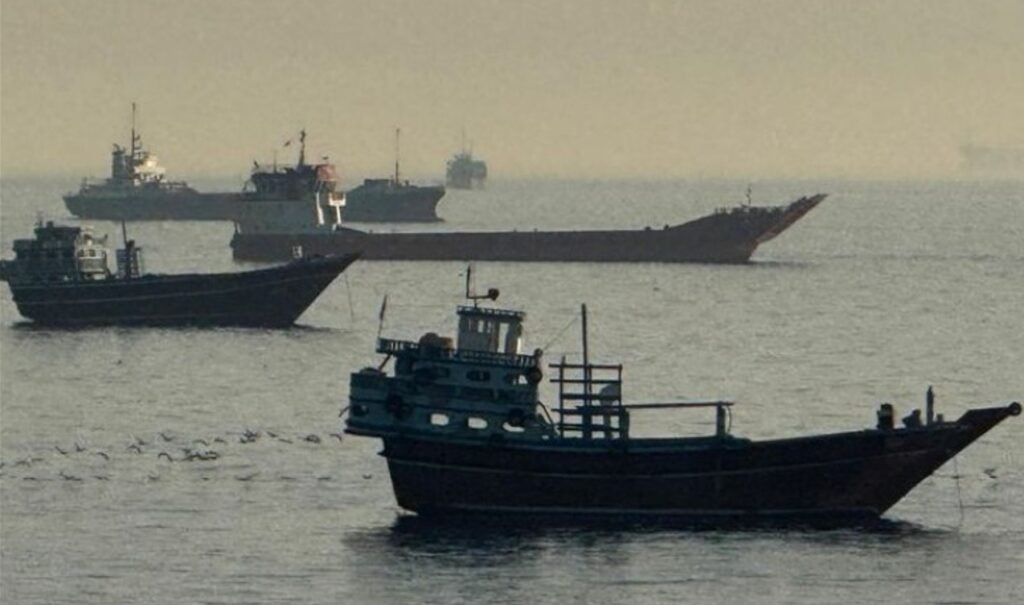
Iran has claimed that it turned back a tanker attempting to enter the Persian Gulf through the southern route of the Strait of Hormuz, as uncertainty over shipping traffic, energy security and maritime trade continues around the strategically vital waterway. Iran says it is restricting vessel movements through the Oman Channel while seeking an arrangement over the operation of the Strait of Hormuz.
The vessel identified in the Iranian report was the Marshall Islands-flagged LPG tanker Haana, which the Islamic Revolutionary Guard Corps (IRGC) said received a warning while attempting an inbound transit. The IRGC also claimed that no vessel traffic had been observed along the southern route during the previous 24 hours. The development is being closely watched by the global shipping industry because uncertainty around Hormuz can affect tanker movements, voyage planning, marine insurance and energy supply chains.
Iran Claims Haana Turned Back From the Strait of Hormuz
Semi-official Iranian news agencies Fars and Mehr reported the latest claims, citing an IRGC spokesperson. According to the reports, an “Indian tanker” attempted to transit the southern route into the Gulf before receiving a warning and turning back.
The tanker was identified as Haana, a 54,368-dwt LPG carrier. Vessel tracking showed that Haana entered the Strait of Hormuz before turning around and returning toward anchorage.
Haana is showing as anchored off Port of Ras Laffan in Qatar and was earlier registered at the Khor Fakkan anchorage off the UAE. Built in 2008, the vessel has reportedly been managed from India since September 2025.
The reference to Haana as an “Indian tanker” requires some distinction. The vessel is flagged by the Marshall Islands, while its management has been reported from India. In international shipping, a vessel’s flag, ownership and management can involve different jurisdictions, making accurate identification important when assessing reports of maritime incidents.
Tanker Restrictions Add to Hormuz Shipping Uncertainty
Reports from India indicate that several leading refineries and major energy companies are studying Iran’s “blacklist” of tankers issued on August 23. They are planning to avoid the listed vessels as well as ship-to-ship transfers while determining how Iran will enforce its edict.
It remains unclear whether those concerns contributed to Haana aborting its entry into the Gulf or whether the tanker was bound for Qatar as part of its voyage plan.
That uncertainty is significant for maritime risk management. When shipowners and charterers cannot clearly assess whether a vessel could face intervention during transit, operators may adopt more cautious voyage-planning decisions. Such uncertainty can contribute to delays, additional operational costs and increased exposure to maritime security risks.
Iran Says Agreement With Oman Could Reopen Strait
Iran has asserted that it reached “acceptable” terms to reopen the Strait of Hormuz after around a month of negotiations with Oman.
The IRGC said the parties agreed on the division of waters and revenues to establish a temporary joint operation. It also said the waterway could be opened within the framework agreed with Oman if the United States “stops obstructing and returns to the agreement.”
The claims place Oman at the center of efforts surrounding the future operation of the Strait of Hormuz. However, the status of the discussions remains contested, with Omani officials saying that talks were continuing.
Shipping Activity Remains Restrained
Shipping activity through the waterway remains limited, according to Kpler data. The data showed a slight increase to 10 vessels entering the strait on Wednesday, compared with eight on Tuesday.
The vessels entering included two medium-range fuel tankers, one liquefied petroleum gas carrier, one Panamax-sized tanker and three Handymax-sized tankers. Exiting the strait were one medium-range fuel tanker, one bitumen tanker and one bulk carrier.
While the number of vessels increased slightly, overall activity remains restrained. For the shipping industry, the key issue is not simply the number of vessels transiting Hormuz but whether commercial operators can maintain predictable and secure passage through the waterway.
For tanker owners and energy companies, uncertainty around access can influence voyage planning, chartering decisions, insurance exposure and the movement of oil, gas and LPG cargoes.
U.S. Blockade Continues as Maritime Pressure Builds
The latest developments come as the United States continues to enforce its blockade. U.S. Central Command raised the number of redirected ships to 75 as of August 27, while saying that its aircraft were patrolling the skies over the Middle East.
The combination of restricted vessel movements, uncertainty surrounding negotiations and continued military activity is keeping the Strait of Hormuz at the center of global maritime security and energy-market concerns.
For shipowners, charterers, commodity traders and energy companies, operational certainty remains a major concern. Prolonged restrictions on tanker movements could have wider implications for oil and gas transportation, LPG shipping, freight costs, marine insurance and global energy security.
What the Haana Turnaround Means for Strait of Hormuz Shipping
The reported Haana turnaround is significant because it illustrates the operational uncertainty facing commercial vessels in one of the world’s most important maritime chokepoints.
The immediate question is not only whether individual vessels can transit the Strait of Hormuz, but whether shipowners and charterers can reliably determine the conditions under which passage will be permitted. If companies begin avoiding particular vessels, routes or ship-to-ship transfers because of concerns over enforcement, the consequences could extend beyond the vessels directly affected.
For the global shipping industry, prolonged uncertainty could translate into higher voyage risks, longer waiting periods, increased insurance costs and disruptions to tanker scheduling. The wider impact would depend on how long the restrictions continue and whether commercial traffic gradually returns to normal levels.
The coming days will therefore be important for determining whether the reported restrictions remain limited to individual vessel movements or develop into a broader reduction in commercial shipping through the Strait of Hormuz.
Recommended Stories:
- Strait of Hormuz Shipping Remains Low as US-Iran Stalemate Continues
- ADNOC Vessel Attacked Again in Strait of Hormuz as Maritime Security Risks Escalate
- UAE Condemns Missile Attack on ADNOC-Linked Vessel in Strait of Hormuz
- Two Tanker Incidents near Oman Raise Strait of Hormuz Maritime Security Concerns