Mozambique Strengthens Maritime Security with National Information Sharing Centre Roadmap
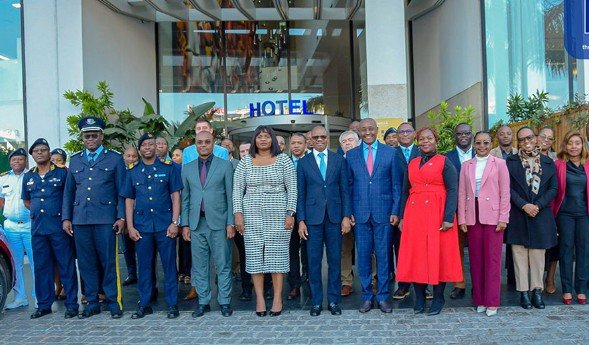
Mozambique has taken a major step toward strengthening maritime security, maritime domain awareness, and regional cooperation after completing a strategic roadmap for the establishment and operation of its National Maritime Information Sharing Centre (NMISC). The roadmap was finalized during a workshop held in Maputo from 27–30 July, organized by the International Maritime Organization (IMO) with financial support from the European Union through the Crisis Response Project for the Red Sea and Western Indian Ocean (CRP-RedWIO).
The initiative aims to improve maritime security infrastructure, maritime intelligence sharing, vessel monitoring, and coordinated response mechanisms among Mozambique’s government agencies. The newly developed roadmap provides a national framework for creating a multi-agency information-sharing platform designed to enhance maritime domain awareness (MDA) and strengthen Mozambique’s integration into the regional maritime security network established under the Djibouti Code of Conduct.
According to IMO, the workshop brought together representatives from Mozambique’s maritime authorities, security agencies, defence institutions, customs, fisheries, migration, and communication sectors to assess the country’s existing legal, institutional, technical, and operational capabilities. Participants identified key requirements for establishing a fully functional NMISC, including governance structures, operational procedures, legal frameworks, and mechanisms for real-time information exchange.
Speaking on behalf of the Government of Mozambique, Mr. Lourenço Afonso José Machado, Member of the Board of Directors of the Maritime Transport Institute (ITRANSMAR, IP), emphasized that stronger information-sharing systems are essential to address increasing maritime threats. He highlighted the importance of coordinated action against piracy, illegal fishing, illicit trafficking, and fraudulent vessel registration, which continue to challenge maritime governance across the Western Indian Ocean region.
The development of the NMISC roadmap represents a significant advancement in Mozambique’s maritime security strategy. A centralized maritime information-sharing system can enable authorities to detect suspicious activities, improve surveillance of national waters, strengthen fisheries protection, and support faster responses to maritime incidents. For a coastal nation with extensive maritime resources and strategic shipping routes, enhanced maritime intelligence capacity is increasingly important for protecting economic interests and supporting the sustainable development of the blue economy.
During the workshop, experts from the EU CRIMARIO Project, the Regional Maritime Information Fusion Centre (RMIFC) in Madagascar, and the Regional Coordination Operations Centre (RCOC) shared regional experiences on maritime information fusion, operational coordination, and collaborative responses to maritime threats.
Their participation highlighted the importance of linking national maritime information centres with regional security networks. Such cooperation allows countries to exchange maritime intelligence, monitor emerging risks, and develop coordinated responses to challenges such as piracy, armed robbery against ships, illegal, unreported and unregulated (IUU) fishing, and other transnational maritime crimes.
The roadmap builds on Mozambique’s previous maritime security initiatives, including progress under the EU-funded Port Security Project, which supported the groundwork for establishing a National Maritime Security Committee (NMSC). Mozambique has also shown interest in joining the Safe Seas for Africa Project and the broader Regional Maritime Security Architecture, further strengthening its role in regional maritime cooperation.
From a strategic perspective, Mozambique’s investment in maritime information infrastructure reflects a wider global shift toward integrated maritime security management. Modern maritime security increasingly depends not only on naval capabilities but also on data sharing, digital surveillance systems, inter-agency coordination, and regional partnerships. Establishing the NMISC could help Mozambique improve maritime governance while supporting safer shipping routes and protecting marine resources.
The completed roadmap will now be refined and submitted to the Government of Mozambique for review and endorsement. Once approved, it will provide the foundation for future technical assistance, capacity-building programs, and operational development under the CRP-RedWIO project.
The initiative forms part of IMO’s continued efforts to support Djibouti Code of Conduct member states in developing national maritime information-sharing capabilities and strengthening regional cooperation against piracy, armed robbery at sea, and other maritime security threats in the Western Indian Ocean.
Read: IMO Backs Vanuatu’s Maritime Security Overhaul amid Rising Global Port Facility Security Standards