
16th-Century Warship Shipwreck Discovered Off Sweden’s Coast in Major Baltic Sea Maritime Archaeology Breakthrough
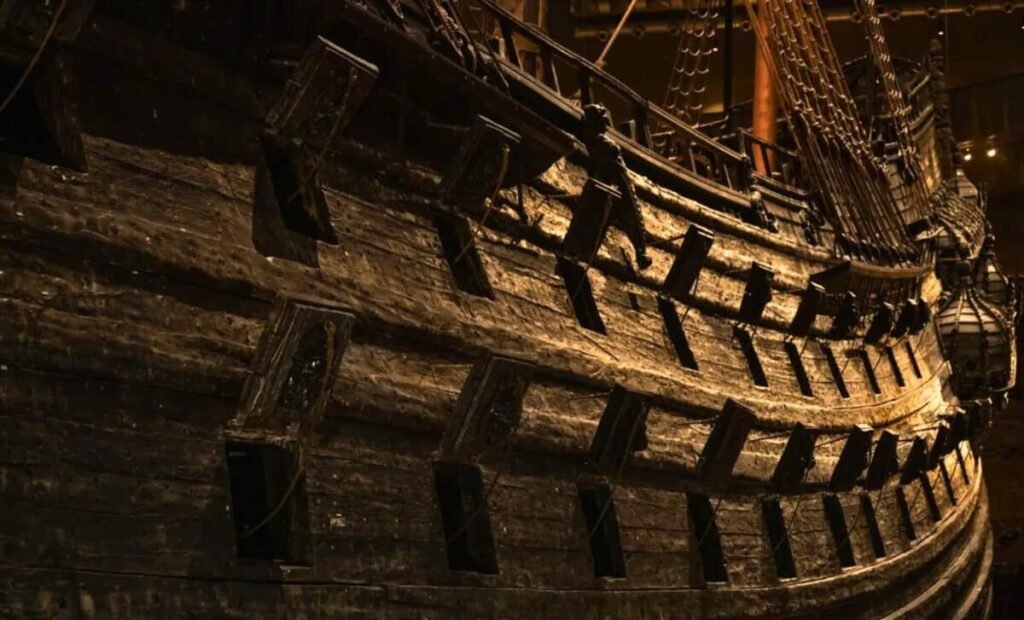
A remarkably well-preserved 16th-century shipwreck has been discovered off the Swedish coast in what experts are calling one of the most significant recent finds in Baltic Sea maritime archaeology. The discovery not only predates Sweden’s famous warship Vasa but also offers rare insight into early naval construction techniques preserved beneath the seabed for over 400 years.
The unexpected find occurred during a routine naval training exercise in late 2025 when the Swedish submarine rescue vessel HMS Belos detected an unusual sonar signal in the Baltic Sea. What initially appeared to be a standard drill quickly turned into a historic breakthrough when a wooden shipwreck was identified resting intact on the seafloor of the Kalmar Strait, the narrow waterway between southeastern Sweden and the island of Öland.
According to the County Administrative Board of Kalmar County, the vessel has been confirmed as a warship dating back to the late 1500s. This places it among the oldest known shipwrecks discovered in the region and even older than the iconic Vasa, which sank in 1628 and remains one of Sweden’s most famous maritime museum exhibits.
Sonar Discovery During Naval Training Operation
The discovery was made when the crew of HMS Belos, part of Sweden’s First Submarine Flotilla, was conducting sonar mapping, remotely operated vehicle (ROV) deployment, and diving drills. Instead of a routine training target, the equipment revealed a well-preserved wooden hull lying undisturbed on the seabed.
Naval officials immediately shifted from training mode to investigation while maintaining standard operational procedures. According to the First Submarine Flotilla, such missions are essential for training in submarine rescue operations, salvage readiness, and underwater infrastructure inspection using advanced sonar and diving technology.
Following the discovery, the Swedish Navy promptly alerted the Kalmar County Administrative Board and the Kalmar County Museum. The Swedish Coast Guard was then assigned to monitor and secure the site as formal assessments began.
Why the Baltic Sea Preserves Ancient Shipwrecks
The Baltic Sea is globally recognized as one of the most important regions for underwater archaeology and historic shipwreck preservation. Its unique brackish water, low oxygen levels, and absence of shipworms create near-ideal conditions for preserving organic materials such as wood.
Unlike other marine environments where shipwrecks rapidly deteriorate, Baltic Sea wrecks often remain structurally intact for centuries. This has made the region a hotspot for maritime archaeology discoveries, including previously recovered champagne bottles, weapon chests, armor fragments, and naval wrecks near Stockholm.
The newly discovered shipwreck now joins this growing list of exceptionally preserved underwater heritage sites in the Baltic Sea.
Dendrochronology Confirms 16th-Century Origin
Scientific analysis using dendrochronology, or tree-ring dating, has confirmed that the timber used in the ship’s construction originates from the late 1500s. This method allows researchers to accurately determine the age of the wood by analyzing growth patterns in the tree rings.
While the vessel has not yet been formally named, experts confirm its historical significance is substantial. Early findings suggest it may provide valuable information on naval architecture, trade routes, and military activity in the Baltic region during a pivotal period in Northern European maritime history.
Maritime archaeologist Lars Einarsson from the Kalmar County Museum described the discovery as exceptionally valuable, noting that the wreck contains “unique historical and archaeological information” that could reshape understanding of 16th-century shipbuilding practices.
High Cultural Value and Strict Protection Measures
Due to its historical importance, the Swedish authorities have classified the wreck as a protected ancient monument under national cultural heritage law. Strict restrictions have been placed on the site, including bans on diving, anchoring, and fishing in the surrounding area.
The Swedish Coast Guard continues to patrol the location while researchers document the wreck for further study. A joint protection and management plan is being developed by the Kalmar County Museum in collaboration with the Armed Forces and HMS Belos crew to ensure long-term preservation.
Officials have not proposed raising the ship, consistent with modern Baltic Sea underwater heritage conservation practices, where most wrecks are preserved in situ rather than salvaged.
Read: Archaeologists Discover Centuries-Old Shipwrecks in Bay of Gibraltar
A Major Addition to Baltic Sea Maritime History
The Kalmar Strait has long been a significant corridor for both commercial shipping and military naval activity. This discovery adds another important chapter to the region’s rich maritime history and strengthens Sweden’s position as a key site for global underwater archaeology research.
As studies continue, researchers hope the wreck will reveal further insights into 16th-century naval engineering, Baltic trade networks, and Sweden’s early maritime power development.
For now, the centuries-old warship remains silently preserved beneath the Baltic waters, guarded, untouched, and waiting to reveal more secrets from the depths of maritime history.