Strait of Hormuz closed again amid US–Iran escalation; maritime security crisis intensifies in Gulf shipping lanes
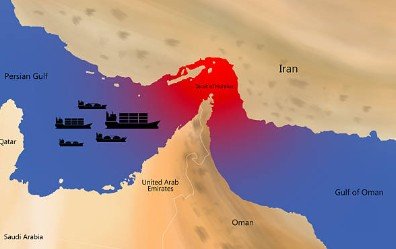
The strategic Strait of Hormuz has been declared closed to all vessels once again as military tensions between the United States and Iran escalate sharply, raising serious concerns over global maritime security, crude oil transport, and freedom of navigation in one of the world’s most critical oil shipping routes.
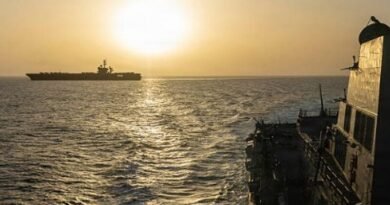
According to recent developments, US forces have launched a new wave of strikes against Iran following several days of intensifying hostilities. In response, Iran has reportedly targeted the US Fifth Fleet stationed in Bahrain and announced the closure of the Strait of Hormuz to all maritime traffic, warning that any vessel attempting to pass through the chokepoint could be attacked.
The escalation comes as US Central Command stated it has completed another round of precision strikes, reportedly targeting Iranian military surveillance infrastructure, communication networks, and air defence installations across multiple locations inside Iran. US Defence Secretary Pete Hegseth had earlier warned of imminent bombardment on key Iranian facilities, reinforcing Washington’s hardened military posture.
Former US President Donald Trump also issued strong statements ahead of the strikes, claiming Iran had failed to agree to a diplomatic deal despite being offered what he described as a “great opportunity” to formalize understandings previously discussed.
The current exchange of attacks follows earlier US airstrikes conducted on Wednesday (10 June), after which Iran launched retaliatory strikes targeting US-linked positions in Bahrain, Kuwait, and Jordan, countries that host American military personnel. The renewed conflict was triggered after Trump accused Iran of downing a US military helicopter near the Strait of Hormuz, further worsening tensions in the Gulf region.
Before the latest escalation, Trump stated that Iran would face severe consequences if negotiations continued to stall, adding that military action would persist unless a deal was reached. He later claimed to Fox News that direct communication had taken place with Iranian officials requesting a halt to strikes, although Iranian state media denied such conversations.
Iranian authorities have instead confirmed that drone operations were launched against the US Fifth Fleet in Bahrain in retaliation for US attacks. However, the US military has stated that none of the Iranian strikes successfully hit their intended targets.
Senior Iranian Armed Forces spokesperson General Abolfazl Shekarchi reiterated Iran’s position, warning of a strong response to any aggression and delivering highly charged political statements against US and Israeli leadership.
Iran’s joint military command has now formally announced the complete closure of the Strait of Hormuz to all vessels. Iranian state media, citing the Revolutionary Guards Navy, also claimed that two US ships violated the closure order and were struck, claims which have been firmly denied by US military sources. US Central Command maintains that commercial shipping continues to move through the Strait without disruption, despite rising geopolitical risk.
Earlier remarks from Trump also suggested that large volumes of crude oil, reportedly over 100 million barrels, had passed through the Strait of Hormuz as part of what he described as a covert US operation supporting oil tanker movements and global crude oil supply chains. He further claimed that millions of barrels of oil were being moved nightly, though later said this information was being disclosed after being “figured out.”
Despite claims from US leadership that a broader agreement could still be reached, no formal nuclear or peace deal between Washington and Tehran has been signed, leaving the situation highly volatile and uncertain for global energy markets and maritime logistics.
Meanwhile, international concern continues to grow over the escalating conflict and its impact on global shipping routes and oil supply security. Australia’s Foreign Minister Penny Wong has joined international partners in urging immediate de-escalation during her visit to the United Kingdom.
Speaking alongside UK Foreign Secretary Yvette Cooper, Wong emphasized that the situation highlights the fragility of regional stability and the urgent need to restore diplomatic engagement. She reiterated that Australia supports renewed negotiations aimed at ending the conflict and stressed that the Strait of Hormuz must remain open to ensure freedom of navigation and stability in global energy and maritime trade routes.
Read More: Iran Reimposes Full Strait of Hormuz Closure Amid Escalating US-Iran Conflict