China Conducts First Marine Biofuel Spill Response Drill at Tangshan Port
China has conducted its first dedicated marine biofuel spill response drill, testing maritime safety, marine pollution control, oil spill response and environmental protection measures for vessels using cleaner fuels. The exercise was held at Jingtang Port in Tangshan, Bohai Sea, as China strengthens emergency preparedness for the growing use of biofuels and clean energy in shipping.
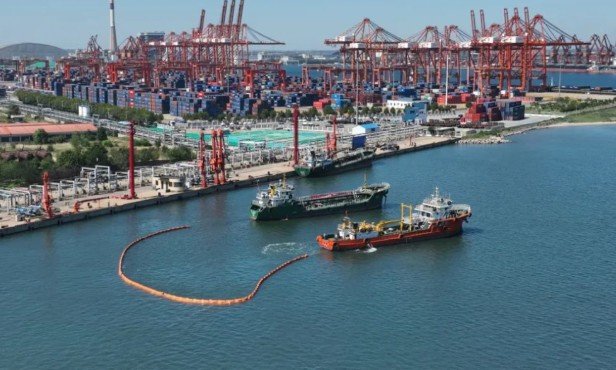
The Tangshan Maritime Safety Administration (MSA) conducted the exercise on 10 September 2026 under the “2026 Green Power Mission.” The drill simulated a vessel carrying biodiesel experiencing a leak during cargo operations at a terminal, with approximately 10 metric tonnes of biodiesel entering the sea. The scenario allowed maritime authorities and emergency teams to test the full response process, from incident reporting and pollution detection to containment, recovery and residual pollution removal.
After receiving the simulated emergency report, the Tangshan MSA’s vessel traffic management centre immediately activated its emergency response procedures, issued a navigation warning and established a traffic control area.

The maritime patrol vessel Haixun 04501 arrived at the scene and took responsibility for on-site emergency coordination. The response involved a drone unit, a pollution response vessel and terminal emergency personnel working together to control the simulated marine fuel spill.
A drone equipped with fluorescence detection equipment was deployed to identify the contaminated area. Terminal emergency personnel operated oil-recovery equipment, while response vessels deployed containment booms to prevent the biodiesel from spreading across the water surface. Spraying equipment was also used to emulsify and remove the surface oil film.
A key part of the exercise was the use of 355-nanometre ultraviolet light together with drone-mounted fluorescence detection technology. The system was used to identify biodiesel contamination and rapidly determine the boundaries of the simulated spill.
The Tangshan MSA said biodiesel differs from conventional fuel oil because its spill traces can be difficult to identify visually under natural light. The fluorescence-based system can trigger and detect biodiesel’s characteristic fluorescence signal, providing responders with data to identify the spill boundary and support subsequent spill containment and recovery operations.
Compared with conventional fuel oil, biodiesel is biodegradable and has a lower sulphur content. However, its characteristics after entering the marine environment and the methods required to detect it differ from those used in conventional oil spill incidents. This creates specific challenges for marine pollution response and maritime environmental protection.
The exercise tested the complete emergency response chain, including incident reporting, aerial monitoring, water-surface containment, spill recovery and removal of residual pollution. It also provided a practical test of coordination between maritime authorities, emergency vessels, terminal personnel and aerial monitoring teams.
Following the exercise, the Tangshan MSA said it will further improve biofuel spill emergency response plans, specialist personnel training and emergency equipment development under its “Green Bohai Sea” initiative.
The authority will also strengthen pollution risk prevention and accident response capabilities for vessels powered by new and clean energy fuels, supporting safer operations and environmental protection as the maritime industry expands its use of alternative marine fuels.
Recommended Stories
- British Firm Begins Oil Spill Containment Operation for Stricken Tanker off Oman
- Bangladesh Joins Three Key IMO Conventions to Strengthen Maritime Safety, Oil Spill Liability and Blue Economy Growth
- South-East Asia Strengthens Cross-Border Oil Spill Response with Regional Maritime Security Workshop in Malaysia
- Sweden Files Charges in Major Baltic Oil Spill as Shadow Tanker Investigation Intensifies