
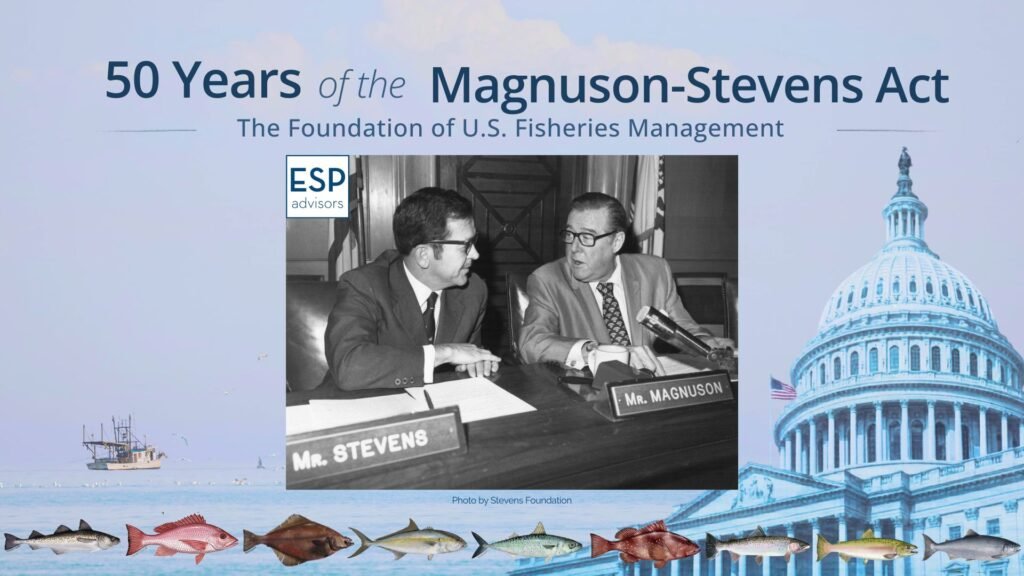
Magnuson-Stevens Act Turns 50: How America Became a Global Leader in Sustainable Fisheries Management
The United States is marking 50 years since the signing of the historic Magnuson-Stevens Fishery Conservation and Management Act, the landmark legislation that transformed the nation into one of the world’s leading forces in sustainable fisheries management, marine conservation, and seafood resource protection.
Signed into law on April 13, 1976, the Magnuson-Stevens Act reshaped the future of the U.S. commercial fishing industry by expanding federal authority over offshore waters, strengthening fish stock protection, and creating a science-based fisheries management system that is still considered among the most advanced globally.
From “Vacuuming the Seas” to Marine Resource Protection
During the 1960s and early 1970s, global fishing activity surged as technological advances allowed fleets to harvest, process, and transport seafood on an industrial scale. At the time, foreign factory trawlers dominated fishing grounds off the American coastline, often operating just beyond the then 3-nautical-mile territorial boundary.
Between 1965 and 1975, foreign fleets caught more fish in U.S. waters than domestic fishermen. Massive offshore trawlers from overseas were accused of “virtually vacuuming the seas” of valuable marine resources, according to Senator Warren Magnuson, one of the architects of the legislation.
Magnuson warned lawmakers that unless the United States learned to properly steward its declining marine resources, the nation risked losing both ecological stability and economic opportunity. Together with Senator Ted Stevens, Representative Don Young, and Representative Gerry Studds, Congress pushed forward comprehensive fisheries reform after years of debate.
Their efforts culminated in the passage of the Magnuson-Stevens Act in 1976 , a defining moment in modern maritime governance and ocean resource management.
Establishing America’s Exclusive Economic Zone
One of the most significant changes introduced by the legislation was the creation of a 200-nautical-mile Exclusive Economic Zone (EEZ) around U.S. coastlines. The move granted American fishermen primary access to marine species within federal waters and drastically reduced foreign fishing pressure.
The Act also established eight regional fishery management councils tasked with developing fishery management plans tailored to local ecosystems and fishing industries. The councils combined representatives from state governments, commercial fishing sectors, scientists, and environmental stakeholders in an effort to create collaborative marine governance.
Guided by scientific advisory committees, the councils were instructed to manage fisheries for “optimum yield”, balancing sustainable harvest levels with long-term economic and environmental benefits.
Implementation authority was assigned to NOAA Fisheries, which continues to oversee federal fisheries policy and enforcement today.
America’s Fishing Boom Triggered New Challenges
After foreign fleets withdrew from U.S. waters, domestic fishing activity expanded rapidly. Federal loan programs encouraged fishermen to invest in larger vessels and more sophisticated equipment, sparking what many described as a new fishing “gold rush.”
However, increased harvesting pressure soon created serious sustainability concerns. Despite scientific surveys, seasonal closures, and size restrictions, several major fisheries experienced dramatic declines.
Some of the most commercially valuable fisheries . including New England cod, haddock, sea scallops, and Gulf red snapper , suffered severe depletion, highlighting the growing risks of overfishing and inadequate stock rebuilding measures.
Sustainable Fisheries Act Strengthened Conservation Efforts
In 1996, Congress responded by passing the Sustainable Fisheries Act, a major reauthorization designed to strengthen conservation and rebuild depleted fish stocks.
The revised legislation required fisheries managers to define measurable standards for identifying overfished stocks and excessive harvest rates. It also mandated rebuilding plans for depleted fisheries and expanded protections for essential fish habitats.
These reforms marked a turning point for U.S. marine conservation policy and laid the foundation for modern ecosystem-based fisheries management.
Rebuilding Fish Stocks Across U.S. Waters
The years following the reforms produced measurable recovery across several important fisheries.
Sea scallops became one of the first major rebuilding success stories in 2001 after years of strict closures and conservation measures. Additional recoveries followed, including silver hake and winter flounder in New England, Pacific whiting and lingcod along the West Coast, and blacktip shark and yellowtail snapper in southeastern waters.
In 2007, President George W. Bush signed another reauthorization of the Magnuson-Stevens Act, introducing mandatory annual catch limits and accountability measures for fisheries exceeding sustainable harvest targets.
The updated framework further strengthened the role of fisheries science by preventing managers from approving catch limits higher than scientifically recommended levels.
According to NOAA, these reforms contributed to the rebuilding of 52 fish stocks since 2000, including more recent recoveries such as Snohomish coho salmon and Pacific bluefin tuna.
Sustainable Seafood Remains Central to U.S. Maritime Policy
Today, the United States operates one of the world’s most closely monitored seafood management systems, combining rigorous scientific assessments, strict enforcement, transparent governance, and stakeholder participation.
American fishermen and seafood producers continue to face challenges ranging from rising fuel prices and foreign seafood competition to climate-driven shifts in fish migration patterns. Yet federal agencies and industry leaders argue that sustainable fisheries management remains essential for protecting marine ecosystems, coastal economies, and long-term seafood security.
Read: The Rising Tide of Technology: Remote Sensing is transforming the Future of Fisheries
As the Magnuson-Stevens Act reaches its 50-year milestone, policymakers and fisheries experts say the next chapter will focus not only on rebuilding fish populations, but also on preserving fishing communities, maritime jobs, and ocean resilience for future generations.