Quebec Marine Monitoring Network Could Strengthen Environmental Regulations and Maritime Conservation
A groundbreaking marine monitoring network deployed in Quebec’s Lower St. Lawrence River is providing scientists with an unprecedented view of underwater activity, offering valuable insights that could strengthen maritime environmental regulations, improve marine ecosystem protection, and support safer shipping operations.
Developed through a collaboration between McGill University, Natural Resources Canada, Université du Québec à Montréal, and Dalhousie University, the innovative system combines seabed seismometers, coastal monitoring stations, and land-based sensors to simultaneously detect underwater earthquakes, whale vocalizations, commercial ship noise, tidal movements, and other marine activities. The research was recently published, highlighting the system’s potential to reshape environmental monitoring in one of Canada’s busiest waterways.
Installed along Quebec’s Bas-Saint-Laurent region on the south shore of the Lower St. Lawrence River, the monitoring network operated continuously between September and May from 2023 to 2025, covering the estuary between Rimouski and Sept-Îles.
Lead researcher Yajing Liu from McGill University’s Department of Earth and Planetary Sciences described the project as a major technological breakthrough, noting that it was the first time researchers successfully deployed seafloor monitoring equipment for an extended period to continuously capture multiple environmental signals from a single integrated system.
According to the study, the experimental network detected twice as many earthquakes as Canada’s National Earthquake Monitoring System while simultaneously recording whale calls, vessel noise, tidal activity, and mining explosions. Using advanced spectral analysis, researchers processed continuous recordings collected at 250 data points per second, allowing them to separate and identify different underwater signals based on their frequencies.
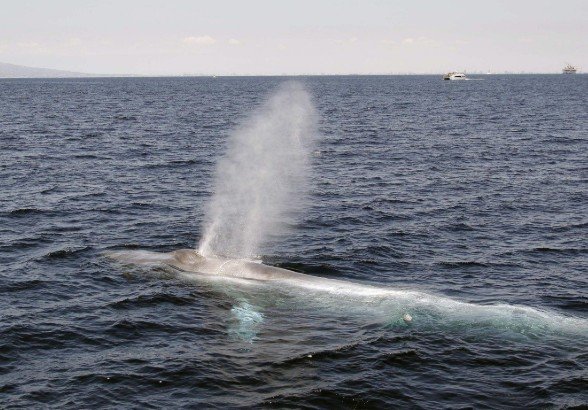
The findings are particularly significant for the maritime industry because the Lower St. Lawrence River serves as one of Canada’s busiest shipping corridors while also supporting important habitats for blue whales and fin whales.
Researchers found that commercial ship noise and whale vocalizations frequently occurred in the same locations and at the same time, raising growing concerns that increasing maritime traffic may interfere with whale communication. Since ship-generated noise overlaps with the frequency range of whale calls, louder vessel traffic may disrupt communication between whales, potentially affecting feeding, migration, and reproduction.
To better understand these impacts, scientists are compiling detailed databases of both whale songs and shipping noise to determine where and when these sounds overlap throughout the estuary.
Beyond monitoring marine mammals, the underwater sensor network is also improving scientists’ understanding of ocean circulation and tidal dynamics. Unlike traditional ocean current models that rely primarily on surface measurements, the seabed seismometers provide critical information directly from the riverbed, helping researchers refine ocean circulation models that influence nutrient transport throughout the ecosystem.
Improved circulation models are particularly valuable because whale populations depend heavily on nutrient-rich waters for feeding.
Previous land-based monitoring stations had already revealed unexpectedly high numbers of whale calls during winter months. However, because those stations could only detect animals close to shore, much of the offshore activity remained undetected. The newly deployed seabed instruments overcome this limitation by monitoring marine life directly beneath the water, capturing activity occurring throughout the estuary.
The new observations may also help researchers investigate why some whales appear to remain in the St. Lawrence estuary longer during winter instead of migrating directly south toward Florida. Scientists suggest changing water temperatures could be influencing migration patterns, although further research with marine biologists will be required to confirm the cause.
Researchers believe the extensive environmental data generated by this integrated monitoring network could play an important role in shaping future marine conservation policies, shipping regulations, underwater noise management, and environmental protection strategies along one of Canada’s most economically important maritime routes.