EU and Seychelles Renew Sustainable Fisheries Agreement, Reopening Tuna Fishing Access for European Fleet
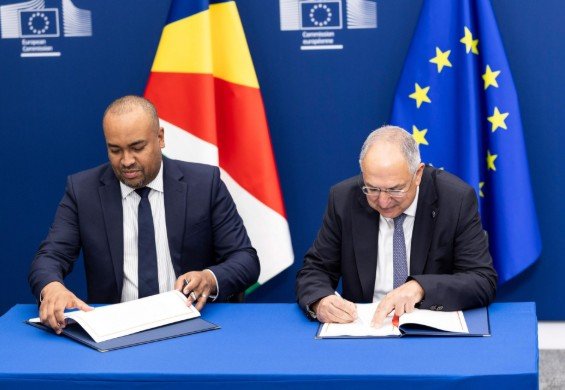
The European Union (EU) and Seychelles have renewed their Sustainable Fisheries Partnership Agreement (SFPA) by signing a new four-year protocol that restores access for EU fishing vessels to Seychelles’ waters. The agreement, signed on 27 July 2026 in Brussels, Belgium, marks a significant step in strengthening sustainable fisheries management, supporting the blue economy, and enhancing long-term maritime cooperation between the two partners.
The protocol was signed by European Commissioner for Fisheries and Oceans Costas Kadis and Seychelles Minister for Fisheries, Agriculture and Blue Economy Wallace Cosgrow. Under the renewed agreement, EU vessels will be permitted to catch up to 55,000 tonnes of tuna and other highly migratory species annually in Seychelles’ Exclusive Economic Zone (EEZ) for the next four years.
The renewed fisheries protocol restores operations for up to 30 EU purse seine vessels and eight longline fishing vessels, whose activities had been suspended after the previous protocol expired on 23 February 2026 while negotiations were underway. The agreement is expected to help maintain a stable supply of tuna for European consumers, where tuna remains the most consumed aquatic product, averaging 2.68 kilograms per person in 2023. Tuna also represented 11% of the EU’s total imports of fishery and aquaculture products in 2024, highlighting its strategic importance to European seafood markets.
Financially, the EU will contribute €23 million over the four-year period, including €3 million specifically dedicated to supporting the sustainable development of Seychelles’ fisheries sector. In addition, European vessel owners will pay €90 per tonne in licence and catch fees, alongside dedicated contributions for marine ecosystem monitoring and environmental management within Seychelles’ waters.
The agreement reinforces the shared commitment of both parties to sustainable ocean governance and responsible fisheries management. As members of the Indian Ocean Tuna Commission (IOTC), the EU and Seychelles aim to balance commercial fishing opportunities with the long-term conservation of tuna stocks and marine biodiversity. The protocol also requires compliance with labour standards established by the International Labour Organization (ILO) and safety regulations set by the International Maritime Organization (IMO) for fishers working aboard EU vessels.
Beyond commercial fishing, the renewed protocol provides EU support for small-scale fisheries, aquaculture development, scientific fisheries research, improved seafood quality and sanitary standards, and stronger fisheries monitoring, control and surveillance systems. It also strengthens efforts to combat Illegal, Unreported and Unregulated (IUU) fishing, helping protect marine resources while improving the socio-economic wellbeing of coastal communities in Seychelles.
The protocol takes provisional effect from 27 July 2026 and will formally enter into force once both the European Union and Seychelles complete their respective ratification procedures, including approval by the European Parliament on the EU side.
Commenting on the agreement, Commissioner for Fisheries and Oceans Costas Kadis said the renewed partnership reflects the EU’s commitment to trusted international cooperation, sustainable fisheries, stronger economic ties, and the long-term health of shared ocean resources.
The renewed agreement builds upon the Sustainable Fisheries Partnership Agreement signed between the European Union and the Republic of Seychelles on 28 February 2020, which remains valid for six years with automatic renewal provisions.
Read:15 Nations Unite Under Mombasa Declaration to Strengthen Global Fight against Illegal Fishing